 MyRecover



Invalid MS DOS Function Error – Quick Solutions for Windows 11/10
The 'Invalid MS-DOS function' error may look like a relic from the past, but it also appears on Windows 11/10. It usually points to a modern mismatch between legacy file operations and today’s file systems or permissions model. This article explains why the error still surfaces in Windows 11/10 and help you restore normal file operations while preserving system stability and data consistency.

By Aria / Updated on February 11, 2026


Cannot Copy from External Hard Drive - "Invalid MS-DOS Function" Error
"Every time I try to view a certain folder on my external hard dive, it hard-freezes File Explorer. Trying to copy files from this folder to my computer hard drive results in it getting stuck, with an ''Invalid MS-DOS Function'' error message. I don't want to even think about how wide-spread throughout the 5TB external hard drive the issue may be."
- Question from ksdixon
When you try to copy, move, or delete files from a hard drive and suddenly see the message "Invalid MS-DOS Function", it usually means Windows failed to complete a basic file system operation. This error often appears when transferring large files, copying data between different file systems, or accessing external storage devices such as USB drives, SD cards, or portable hard disks.
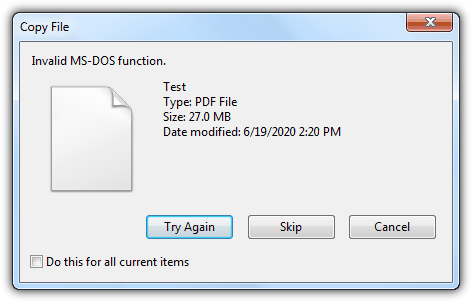
In practical terms, the "Invalid MS-DOS function" error can prevent you from accessing important files, interrupt backups, or even make a drive appear unusable. Repeated failures even increase the risk of file corruption or accidental data loss.
Why Does the "Invalid MS-DOS Function" Error Occur?
The "Invalid MS-DOS function" error usually stems from compatibility or file system issues rather than hardware failure. Common causes include:
- File system mismatch (for example, copying files larger than 4GB to a FAT32 drive),
- Corrupted file system structures on the source or destination drive,
- Unsupported file attributes or overly long file names,
- Disk errors or bad sectors on the external drive,
- System file corruption in Windows,
- Improper drive optimization or fragmentation,
- Registry misconfigurations affecting file operations.
How to Fix the "Invalid MS DOS Function" Error on Windows
This section outlines several methods you can try to resolve this issue. Each method targets a different underlying cause, so you can choose the appropriate one based on your specific situation. Let's explore them one by one.
Shorten the File Name or Path
The path or name of the file you want to moving too long (over 255 characters) can cause the "Invalid MS-DOS function" error. You can rename the files to shorter names or moving files closer to the root directory. Avoid deeply nested folders. Then, try moving the file again to check if the error persists.
Check File Attributes
Files with compression, encryption, symbolic link, or ADS attributes can also trigger the "Invalid MS-DOS function" error when being moved, especially when copying them from an NTFS drive to a FAT32 drive, as FAT32 does not support the advanced features of NTFS.
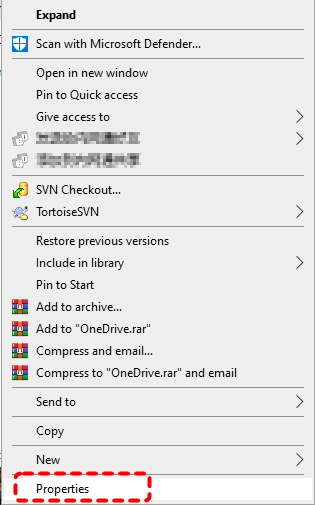
Step 1. Locate the file or folder in File Explorer and right click on it, then choose "Properties".
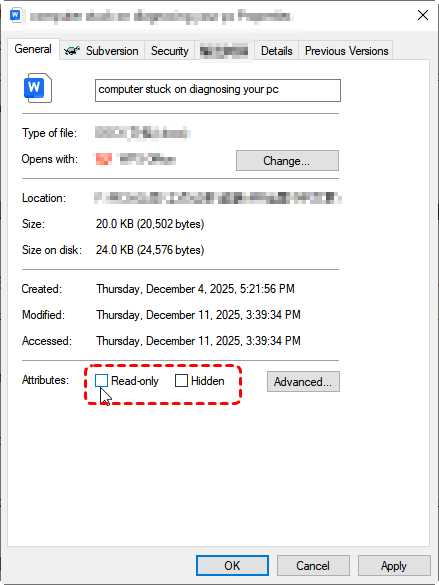
Step 2. Under the "General" tab, check if the "Read-only" attribute is ticked. If so, uncheck it.
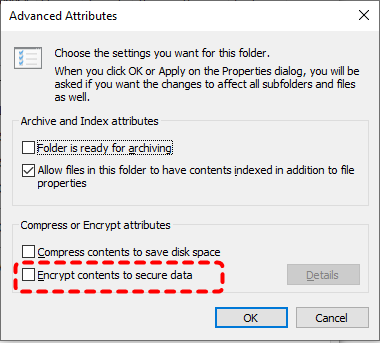
Step 3. Click "Advanced", check if the "Encrypt contents to secure data" is selected. If it is, you may encounter the "Invalid MS-DOS Function" or "Access Denied" error when copying the file to a FAT32 or exFAT drive.
Boot Windows in Safe Mode
Third-party programs running in the background can also interfere with normal disk operations, such as copying, deleting, or moving files. Safe Mode loads Windows with minimal drivers and services, helping eliminate software conflicts.
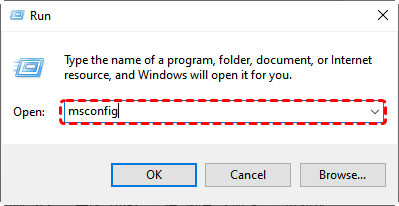
Step 1. Press "Win" + "R" and type "msconfig" in the Run dialog, then click "OK" to open the System Configuration window.
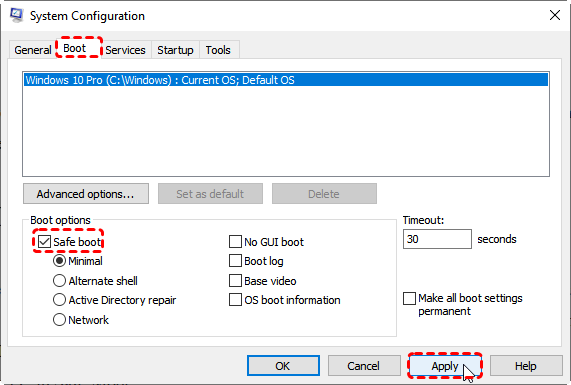
Step 2. Go to the "Boot" tab and check the box next to "Safe Mode", then click "Apply" and "OK".
Step 3. Click "Restart" button to enter Safe Mode. Moving the file again to check if the error is resolved. If not, proceed to the next solutions.
Use the CHKDSK Command
Logical errors or physical damage on the target storage device can cause failures when writing copied files. Windows includes a diagnostic tool for hard drive logical errors—the CHKDSK command, which can detect and repair any file system errors it finds.
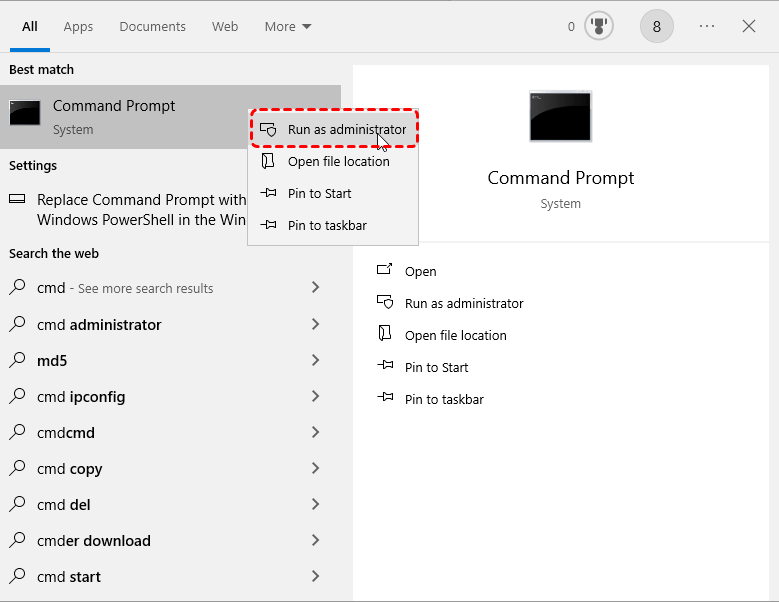
Step 1. Locate Command Prompt in the Start menu and run it as administrator.
Step 2. Enter the following command "chkdsk G: /f /r" and hit the "Enter" key. Replace the drive letter "G" with your actual drive letter.
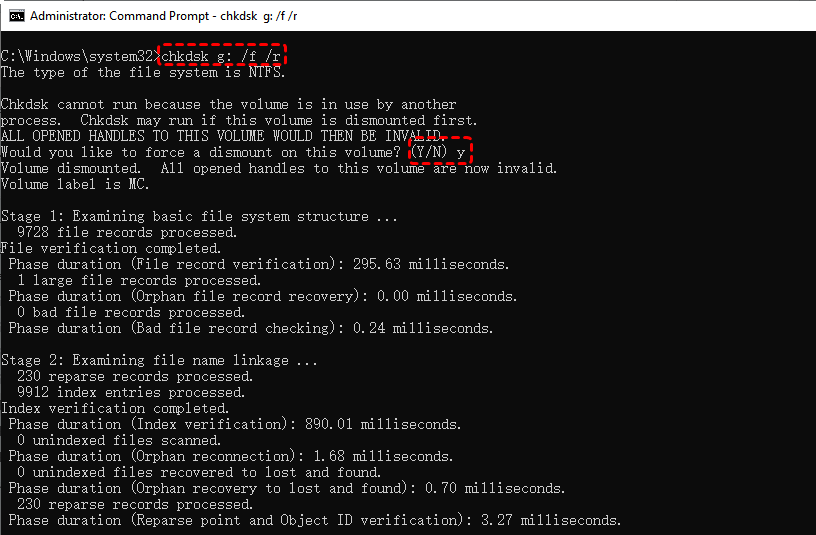
Wait for the command to complete, copying the files again to check if the "Invalid MS-DOS function" error is still here.
Optimizing and Defragging the Drive
File fragmentation can interfere with read/write operations on older drives. If the affected hard drive is HDD, you can try optimizing and defragging it to fix the "Invalid MS DOS function" error.
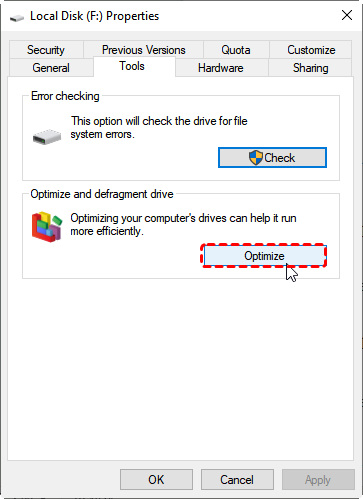
Step 1. Locate the hard drive in File Explorer and right click on it, then choose "Properties" from the context menu.
Step 2. Click "Optimize" under the "Tools" tab.
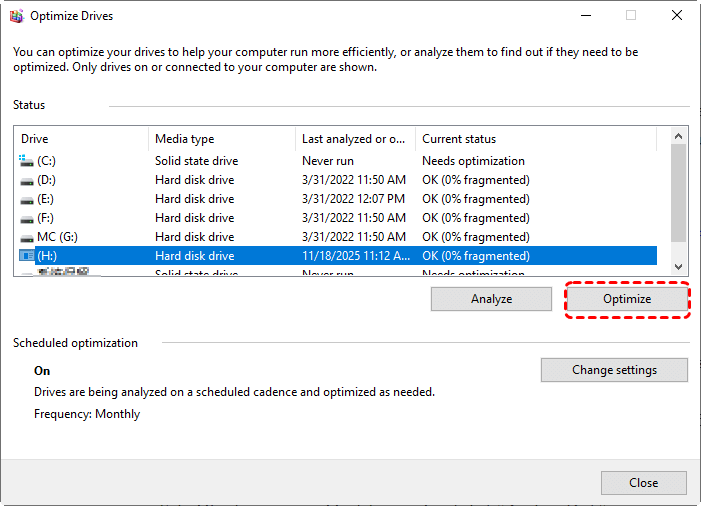
Step 3. Select the drive with the error and click "Optimize"
Perform an SFC Scan to Check System Files
Outdated or corrupted system files can trigger a range of errors and glitches on Windows 10 and 11, including the "Invalid MS-DOS Function" error. You can resolve this file copy/delete error by running a system file check via Command Prompt (CMD).
Step 1. Open Command Prompt and run it as administrator.
Step 2. Type the following command one by one:
dism /online /cleanup-image /restorehealth
sfc /scannow
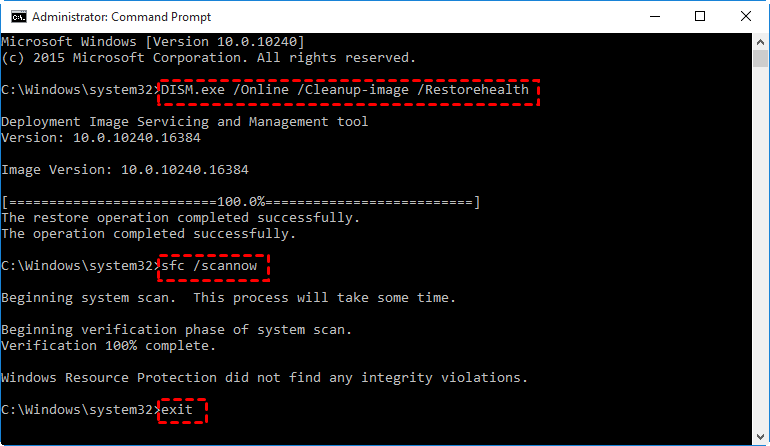
Step 3. Restart your computer after the command completes. Check if the error continues.
Use the Registry Editor
Modifying registry keys can sometimes resolve issues like "Invalid MS-DOS Function". However, always back up the registry before making any edits. Any incorrect changes can lead to unexpected system crashes, Blue Screens of Death (BSODs), and other serious problems.
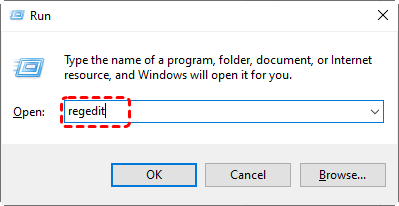
Step 1. Press "Win" + "R" and type "regedit" in the Run dialog, then hit the "Enter" key to open Registry Editor.
Step 2. Navigate to the following path:
HKEY_LOCAL_MACHINE\SOFTWARE\Policies\Microsoft\Windows\System
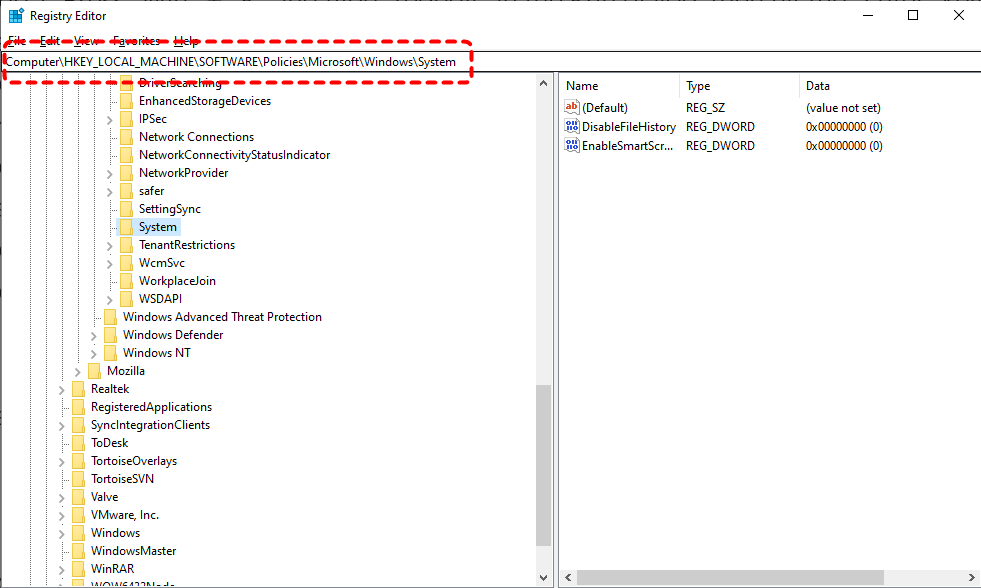
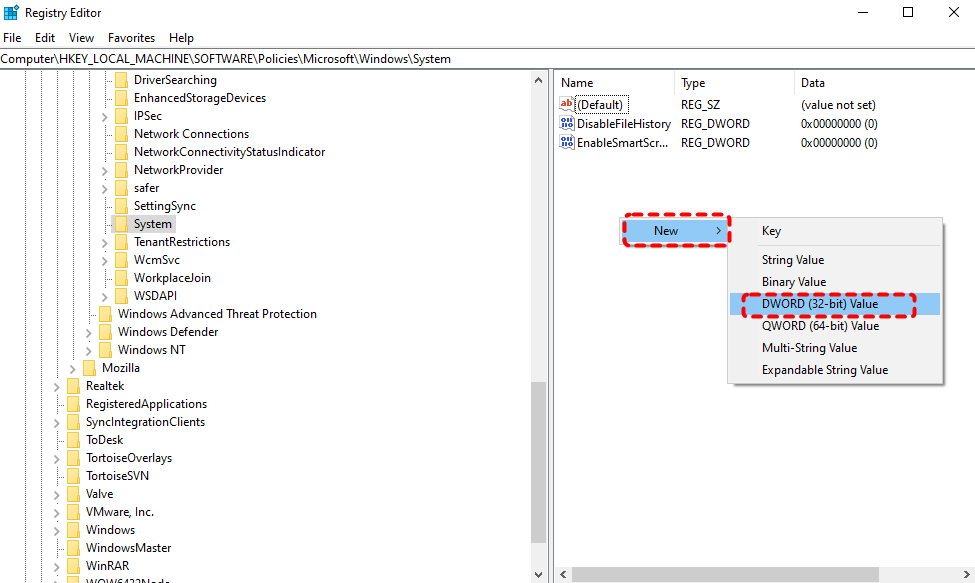
Step 3. Right click on blank space in the right panel, then choose "New" > "DWORD (32-bit) Value".
Step 4. Rename the created key as "CopyFileBufferedSynchronousIo".
Step 5. Double click on it and change the value data to 1, then click "OK" to save the changes.
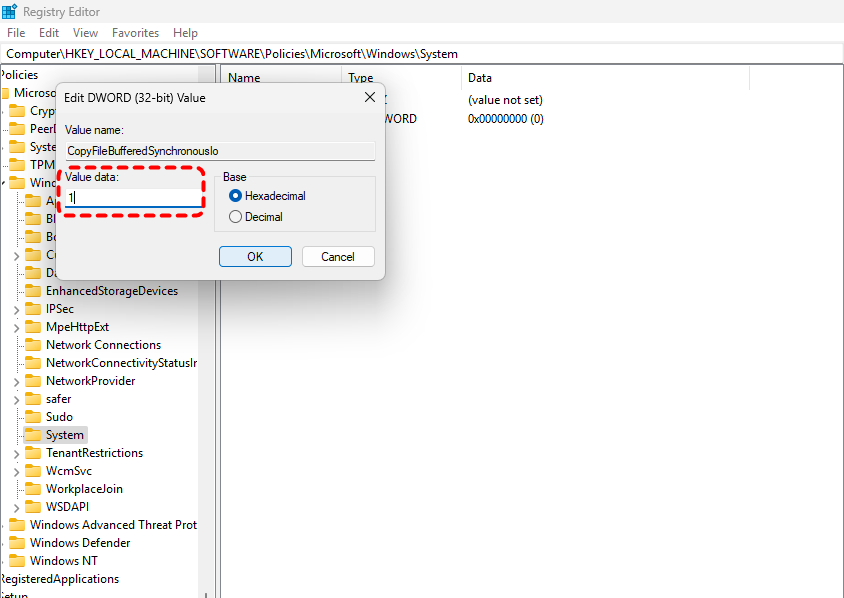
Restart your computer and try copying files again to see if the error has been resolved.
Format the Destination Drive
If the file system of your drive (e.g., Ext4 or Ext3) is incompatible with Windows, the system will also block you from copying or moving files to the target drive. You can format the drive to a Windows-compatible file system to resolve this issue, note that this method will erase all existing files on the target drive.
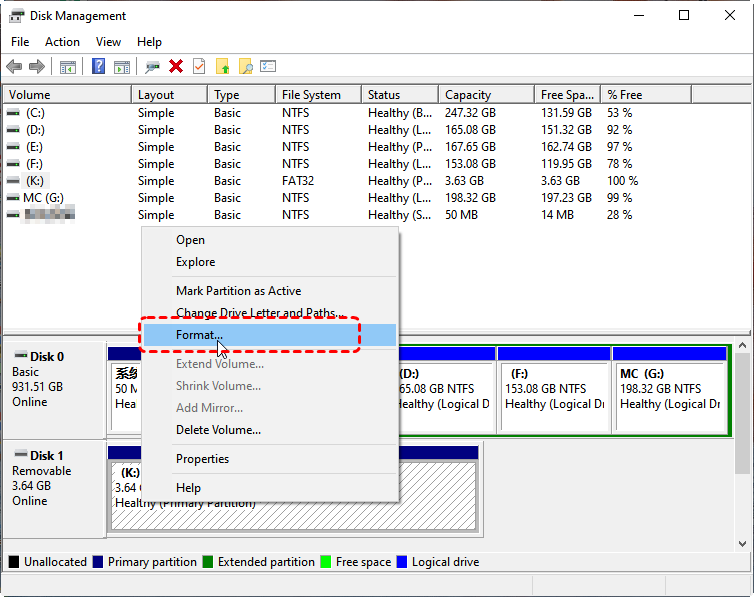
Step 1. Press "Win" + "X" and choose "Disk Management" to open it.
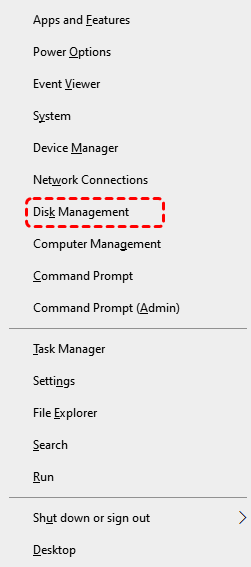
Step 2. Select the drive with "Invalid MS DOS function" error and right click on it, then choose "Format".
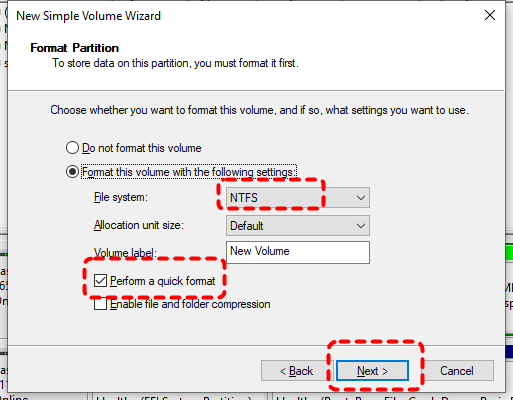
Step 3. Select a Windows supported file system like NTFS and check the "Perform a quick format" option, then click "Start".
How to Recover Lost Files from the Affected Drive
If the "Invalid MS-DOS function" error has caused files to disappear, become inaccessible, or fail during transfer, data recovery should be your next priority, especially before reformatting or making major changes. This is where MyRecover comes in handy. MyRecover is a professional data recovery solution designed to retrieve files from corrupted hard drive, inaccessible partition, or encrypted hard drive. It supports recovery from 500+ storage devices including external hard drives like USB, SD cards, etc. and SSDs.
 MyRecover
- With a success rate of up to 99% for all Windows data.
- Support 500+ devices,such as SSDs, HDDs, internal & external hard drive, and more.
- Cover multiple data loss scenarios, like format, deletion, system crash, etc.
- Recover data from special loaction with shorter waiting times.
 100% Secure
Step 1. Download and install MyRecover on a Windows supported PC from Microsoft Store, avoid installing it on the drive with los files.
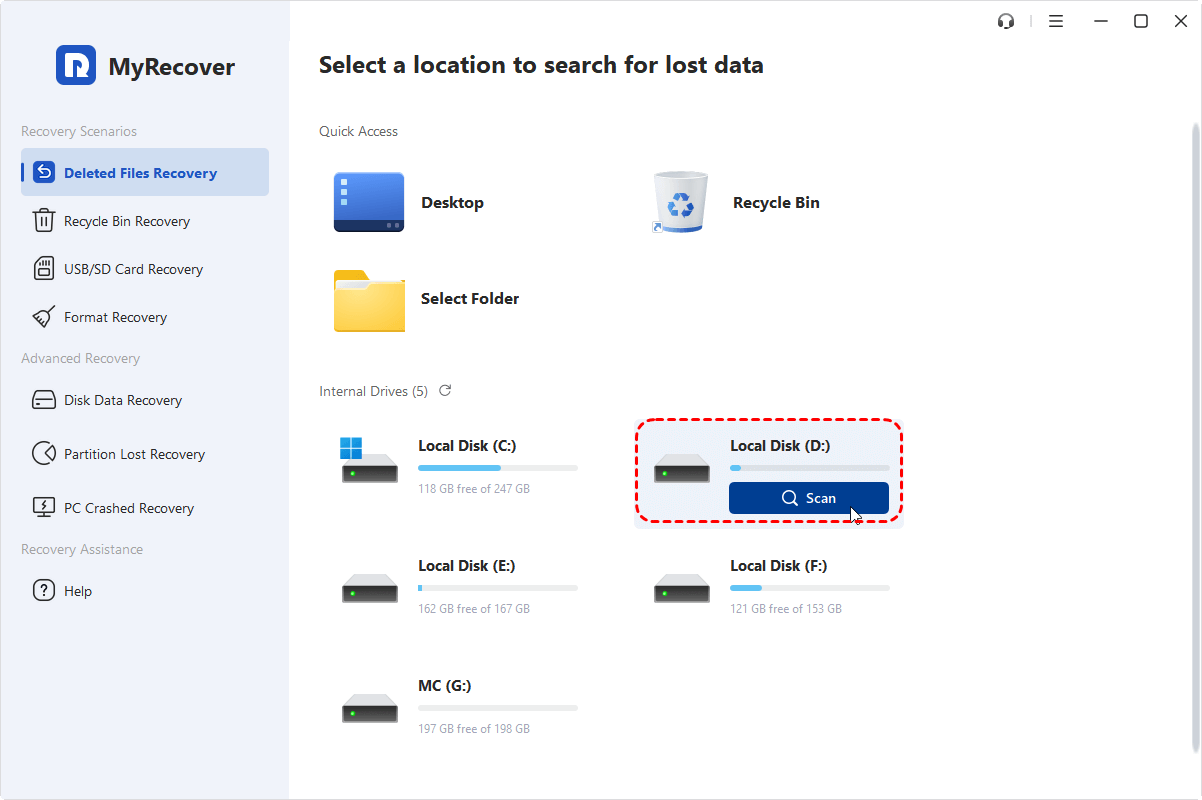
Step 2. Launch the application and select the affected drive to scan, then click "Scan". If you want to recover files from formatted or corrupted hard drive, you can click "Deep Scan" to find more file fragments.
Step 3. After the scan is completed, choose the files you wish to recover from the recoverable lists and click "Recover".
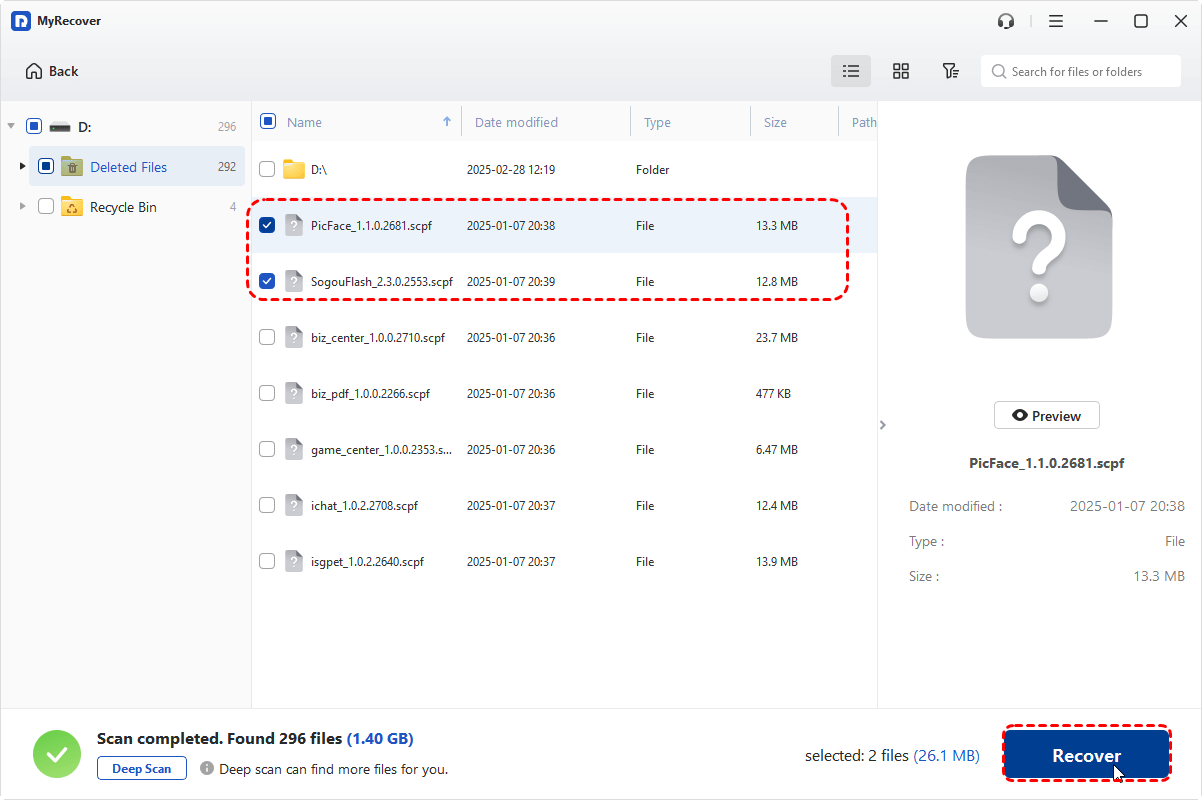
With MyRecover Free, you can recover up to 500MB of data for free. If you require unlimited recovery and file content previews, MyRecover Professional edition offers these advanced features to meet all your data recovery needs. It even allows data recovery from dead computer.
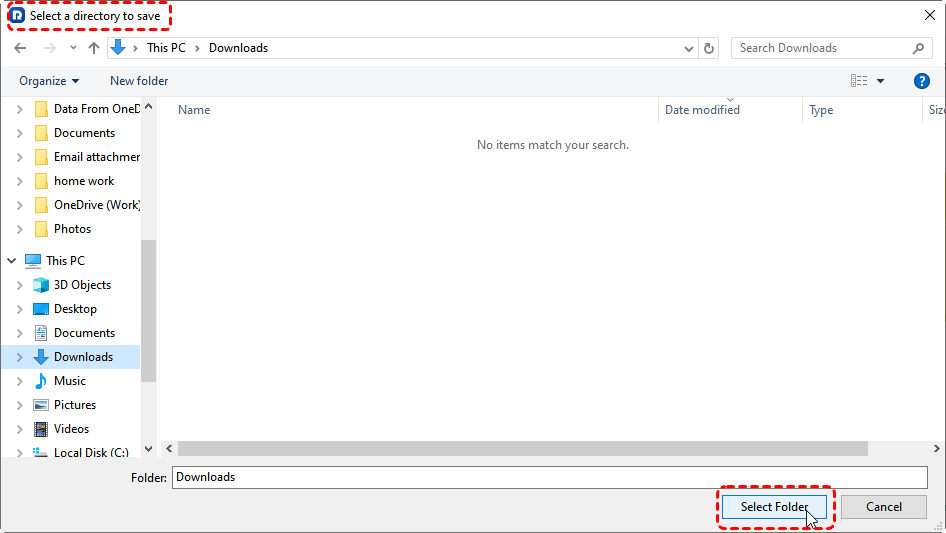
Step 4. Select a safe location to save the recovered files (not the original location).
Conclusion
The "Invalid MS-DOS function" error may seem like a simple copy failure, but it often signals deeper compatibility or file system issues. By addressing the root cause with the solutions outlined above, you can usually restore normal file operations.
Most importantly, if files are already at risk, prioritize recovery before applying irreversible fixes. With the reliable tools like MyRecover, even drives affected by persistent Windows errors can still yield their valuable data.

Stay Updated With Our
Latest Tips
Add us as a preferred source on Google to never miss helpful guides.
 Add as preferred source >>