 MyRecover



Solved: Dash Cam Not Recognizing SD Card
When a dash cam does not recognizing SD card, it may be due to file system errors, damaged storage, or incorrect card type. Discover step-by-step troubleshooting solutions to fix detection problems and prevent future recording failures.

By Vera / Updated on February 27, 2026


Introduce
Dashcam not reading an SD card, how to access the missing footage.
- Question from Reddit
If your dash cam not recognizing sd card, you’re not alone. It’s one of the most common — and frustrating — problems drivers face. You install the camera, insert the SD card, power it on… and boom. "No SD card detected".
Now what?
Here’s the good news: in most cases, this problem is completely fixable. And in this guide, I’ll walk you through every possible cause and solution — step by step, clearly, and in the right order. Let’s fix this properly.
Why This Problem Happens So Often?
A dash cam is like a digital witness riding shotgun. But without a functioning SD card, it’s just an empty shell. No storage means no recordings. And no recordings mean no evidence.
The issue usually comes down to one of five things:
1. Incompatible SD Card Type
Some dash cams only support microSD cards up to a certain capacity. Others require specific speed ratings. If you’re using a standard SD card with an adapter or an ultra-high-capacity card your device doesn’t support, detection issues are common.
2. Incorrect File System Format
Many dash cams require FAT32 formatting. If your card is formatted as exFAT or NTFS, the dash cam may refuse to read it. Think of it like speaking different languages. The dash cam just can’t understand the file system. >> Want to convert NTFS to FAT32 without losing data?
3. Corrupted or Damaged SD Card
SD cards wear out over time. Since dash cams constantly overwrite data, corruption happens faster than you might expect.
Signs include:
- Frequent error messages
- Random shutdowns
- Missing footage
4. Firmware Issues
Outdated firmware can cause compatibility issues with newer SD cards. Sometimes the problem isn’t the card — it’s the camera’s software.
5. Physical Connection Problems
Dust, improper insertion, or damaged card slots can also cause detection failure. It’s not always complicated. Sometimes it’s just a loose fit.
How to Fix Dash Cam Not Recognizing SD Card (Standardized Step-by-Step Guide)
Follow these steps in order. Do not skip ahead.
Step 1: Power Off the Dash Cam Completely
1. Turn off your vehicle.
2. Disconnect the dash cam from power.
3. Wait at least 30 seconds.
This ensures the system fully resets.
Step 2: Remove and Inspect the SD Card
1. Carefully remove the SD card.
2. Inspect it under good lighting.
3. Check for scratches, cracks, or bent edges.
4. Inspect the metal contact points.
If the card is physically damaged, replace it immediately.
Step 3: Clean the SD Card and Slot
1. Use compressed air to gently clean the SD slot.
2. Wipe the SD card contacts with a dry microfiber cloth.
3. Do NOT use liquids.
Dust alone can cause detection failure.
Step 4: Verify Compatibility
1. Check your dash cam manual or official website.
2. Confirm supported capacity (e.g., 128GB max).
3. Confirm required speed class (Class 10 / U3).
4. Confirm recommended card type (High Endurance preferred).
If your card doesn’t match specifications, replace it.
Step 5: Format the SD Card Correctly
⚠️ Warning: Formatting erases all data. Back up important files first.
👉 On Windows
1. Insert the SD card into your computer.
2. Open File Explorer. Right-click the SD card. Select "Format".
3. Choose FAT32 as the file system. Select "Quick Format". And click "Start".
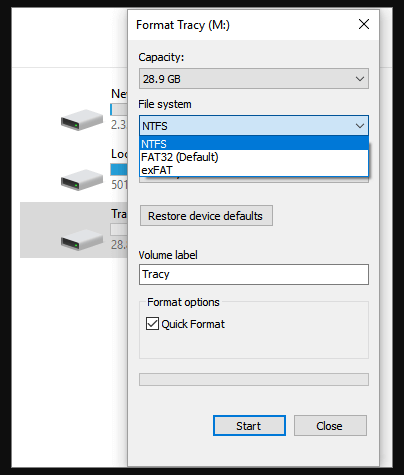
4. Wait for completion.
If FAT32 is unavailable for larger cards, use a FAT32 formatting utility.
👉 On Mac
1. Insert the SD card.
2. Open Disk Utility. Select the SD card from the left panel. Click "Erase".
3. Choose "MS-DOS (FAT) ". Click "Erase".
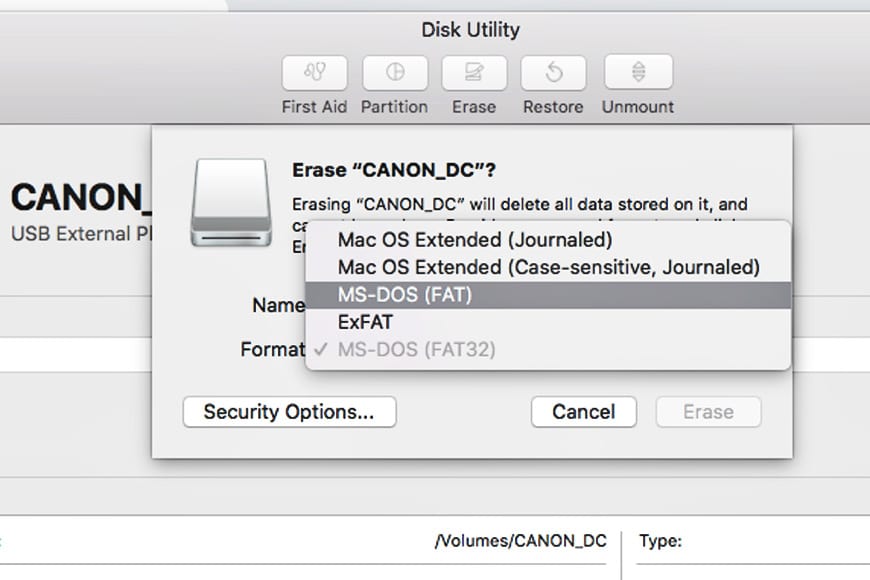
4. Wait for completion.
Step 6: Format Inside the Dash Cam (Recommended)
After computer formatting:
1. Insert the SD card into the dash cam.
2. Power it on.
3. Navigate to Settings. Select "Format SD Card". And confirm.
Formatting inside the device ensures perfect compatibility.
Step 7: Update Dash Cam Firmware
1. Visit the manufacturer’s official website.
2. Search your dash cam model number.
3. Download the latest firmware version.
4. Follow installation instructions exactly.
5. Restart the device.
Firmware updates often solve SD recognition issues instantly.
Step 8: Test with a Brand-New High-Endurance SD Card
If the issue persists:
1. Purchase a compatible high-endurance microSD card.
2. Insert it into the dash cam.
3. Power on the device.
If the new card works immediately, your old card is worn out.
How to Recover Lost Footage from a Corrupted SD Card
What if your SD card failed — and important footage is gone? This is where data recovery tools come in. If your "dash cam not recognizing SD card" is caused by corruption, stop using the card immediately. Continued use may overwrite recoverable files.
You can use a professional recovery tool like MyRecover to scan the SD card and restore deleted or inaccessible footage. It’s designed to recover data from formatted, corrupted, or unreadable storage devices.
 100% Secure
To recover files:
1. Remove the SD card from the dash cam.
2. Insert it into your computer.
3. Download and launch the professional recovery software - MyRecover.
4. Run a full scan of the SD card.
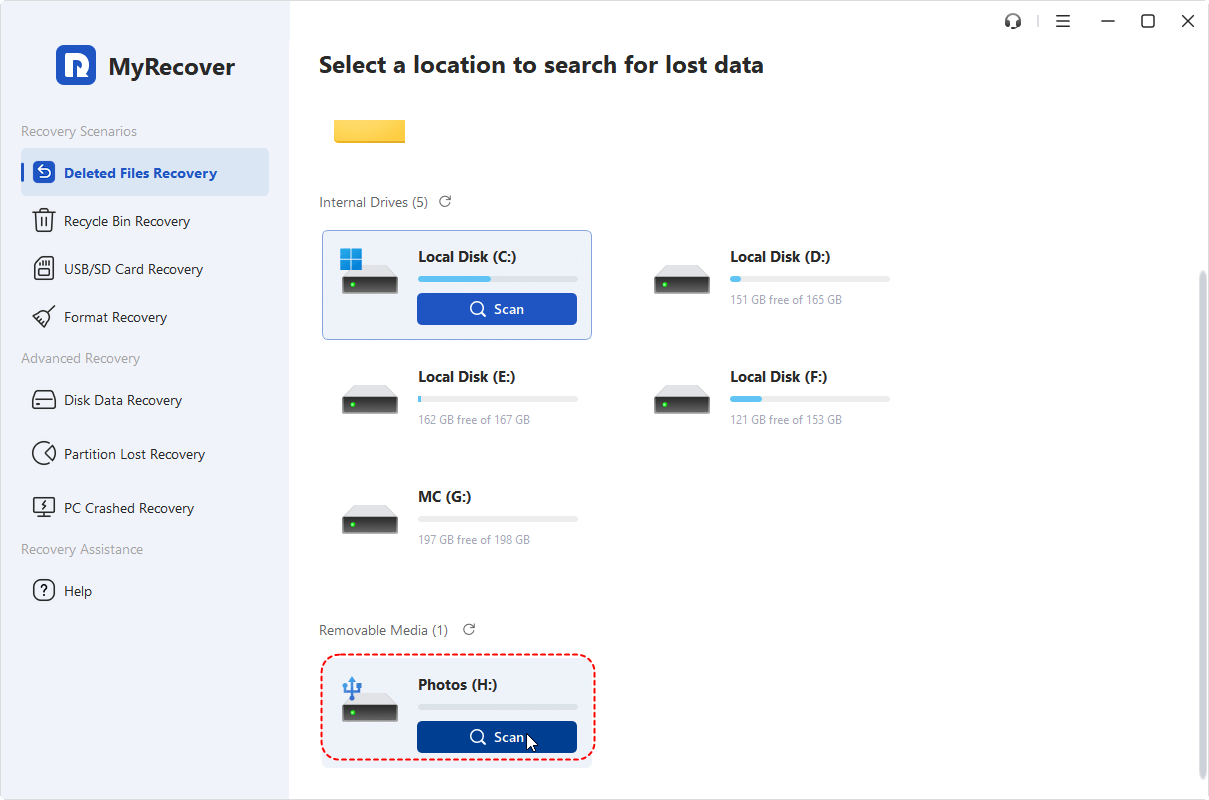
5. Preview recoverable videos.
6. Restore them to a different storage location (not the same SD card).
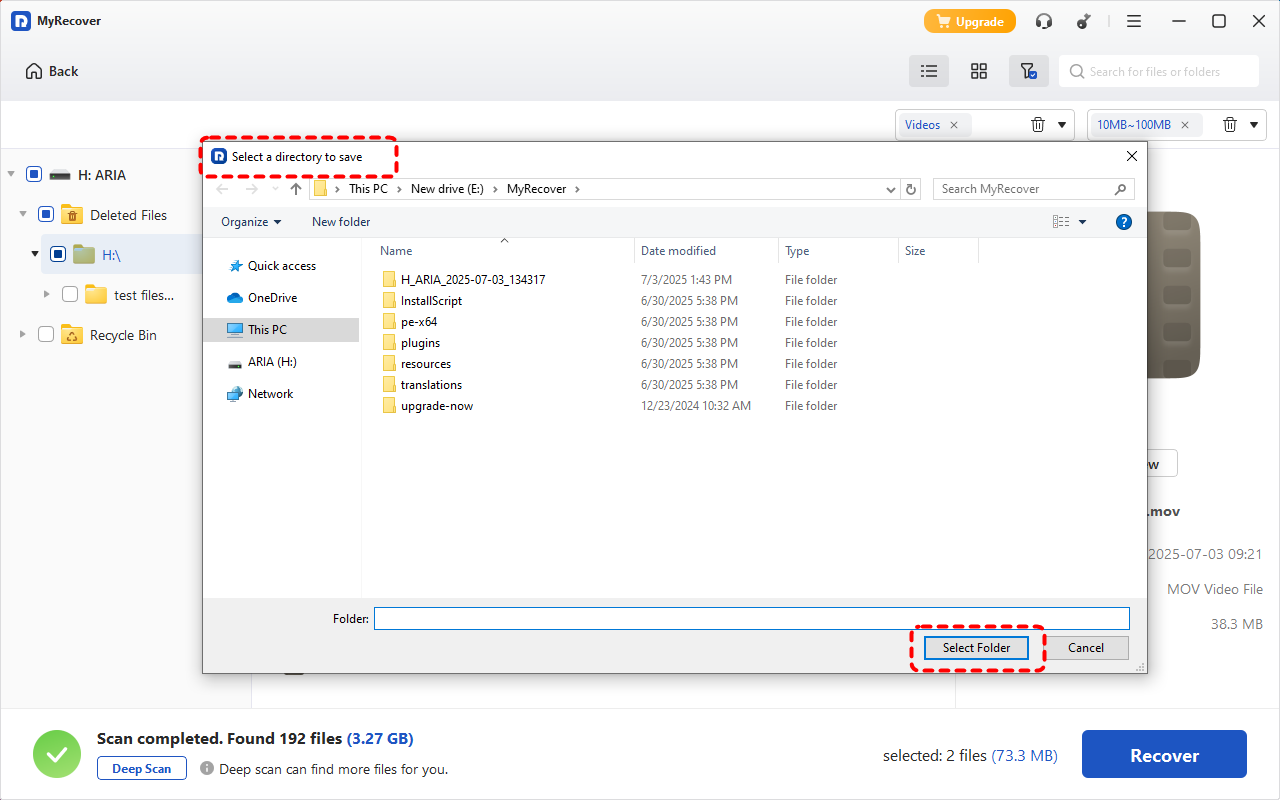
The sooner you act, the better your recovery chances.
How to Prevent SD Card Detection Problems
Prevention saves time, money, and stress.
1. Use High-Endurance SD Cards Only
These are specifically designed for:
- Surveillance cameras
- Dash cams
- Continuous video recording
They last significantly longer than standard cards.
2. Format Monthly
Set a reminder. Formatting every 3–4 weeks keeps the file system clean and reduces corruption risk.
3. Avoid Sudden Power Loss
Hard engine shutdowns can corrupt files. Whenever possible:
- Turn off the car normally
- Avoid unplugging the dash cam mid-recording
4. Replace SD Cards Every 12–24 Months
Even high-endurance cards wear out. If your card is over two years old, replace it proactively.
Conclusion
If your dash cam not recognizing sd card, don’t panic. In most cases, it’s either compatibility, formatting, or normal wear.
Follow the standardized steps:
- Power off completely;
- Inspect and clean;
- Verify compatibility;
- Format properly;
- Update firmware;
- Test with a new high-endurance card.
And if valuable footage is missing, act fast and use recovery software before it’s overwritten.
Your dash cam is only as reliable as the SD card inside it. Treat it well — and it’ll protect you when it matters most.

Stay Updated With Our
Latest Tips
Add us as a preferred source on Google to never miss helpful guides.
 Add as preferred source >>