 MyRecover



How to Fix Green Screen of Death on Windows?
The Green Screen of Death (GSOD) on Windows 10 and Windows 11 is a critical system error commonly related to Insider Preview builds, driver conflicts, or system file corruption. This guide explains what causes the Windows Green Screen of Death and provides clear, step-by-step solutions to help you troubleshoot and fix the issue effectively.

By Emma / Updated on January 27, 2026


About Green Screen of Death (GSOD)-Different from BSOD
The Green Screen of Death (GSOD) is a system crash screen in Windows that looks similar to the Blue Screen of Death (BSOD), but with a green background. It usually appears when Windows encounters a critical error it cannot recover from, forcing the system to stop to prevent further damage.
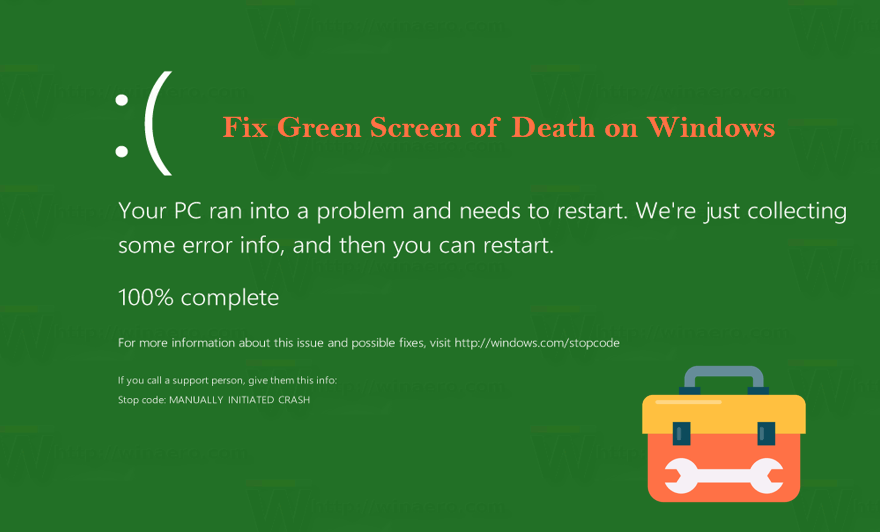
Unlike the BSOD, the GSOD is most commonly seen in Windows Insider Preview builds. Microsoft uses the green screen instead of blue to help developers and testers distinguish preview-build crashes from those in stable releases. When a GSOD occurs, Windows typically displays an error message or stop code and then restarts the system.
In short, the GSOD is a protective mechanism—it indicates that something went seriously wrong at the system or kernel level, and Windows shut itself down to avoid data corruption or hardware damage.
What Causes a Green Screen of Death?
In most cases, the Green Screen of Death is triggered by low-level system problems, such as:
- Faulty or incompatible drivers, especially graphics, storage, or chipset drivers.
- Windows Insider Preview bugs, since preview builds are not fully stable.
- Hardware issues, such as failing RAM, GPU problems, or overheating.
- Corrupted system files caused by improper updates, sudden shutdowns, or disk errors.
- Conflicts with third-party software, including antivirus or system utilities.
Because GSODs usually occur in testing environments, they often signal unfinished features, driver incompatibilities, or experimental updates rather than user mistakes.
How to Fix Green Screen in Windows 10?
After understanding what causes the GSOD errors, now comes the core question: how to remove the Green Screen of Death. For your convenience, we have rounded up the following effective methods. You can try them in order —start simple, then go deeper.
1. Restart Your PC (If It’s Stuck)
Hold the Power button for 5 to 10 seconds to force shutdown. Wait a few seconds, then restart the computer. Sometimes the GSOD is caused by a temporary system glitch and won’t return after rebooting.
2. Boot into Safe Mode
Safe Mode starts Windows 10 with a minimal set of drivers and system services, which helps determine whether the green screen issue is caused by drivers, third-party software, or system conflicts.
👉If Windows 10 keeps showing a green screen or fails to load properly:
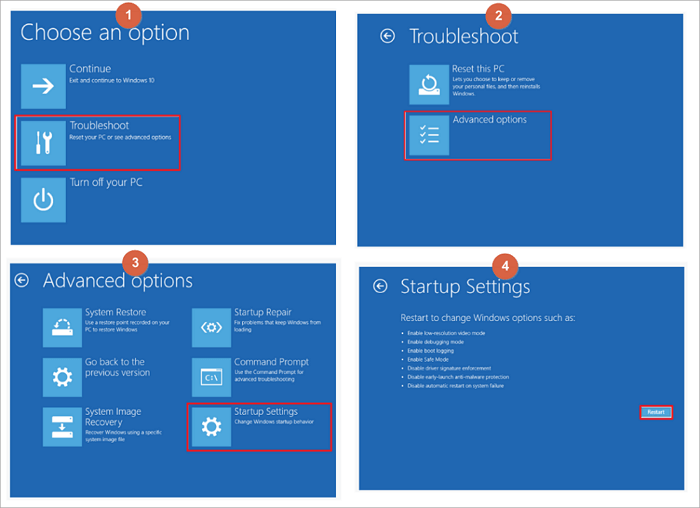
Step 1. Interrupt startup 2–3 times to trigger Windows Recovery Environment (WinRE).
Step 2. Navigate to: "Troubleshoot → Advanced options → Startup Settings".
Step 3. Press "4" or "F4" to enable Safe Mode.
👉If Windows can still reach the desktop:
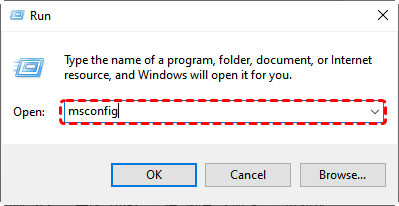
Step 1. Press "Win + R", type "msconfig", and press Enter.
Step 2. Go to the Boot tab. Check "Safe boot". Select "Minimal".
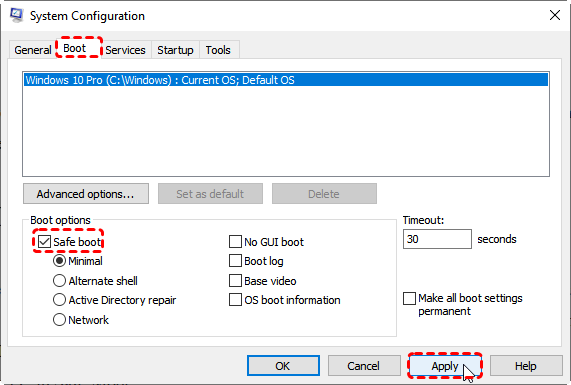
Step 3. Click "Apply", then "Restart".
If the Green Screen of Death does not occur in Safe Mode, the problem is very likely related to graphics or other device drivers, recent Windows updates, third-party software or startup programs.
3. Update or Roll Back Device Drivers
Faulty or incompatible drivers, especially graphics drivers, are one of the most common causes of the Green Screen of Death in Windows 10. Updating or reverting problematic drivers can often resolve the issue quickly.
To update drivers:
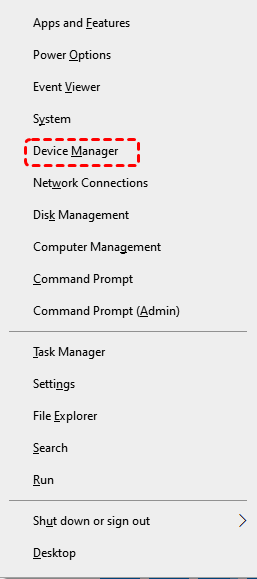
Step 1. Press "Win + X"and select "Device Manager".
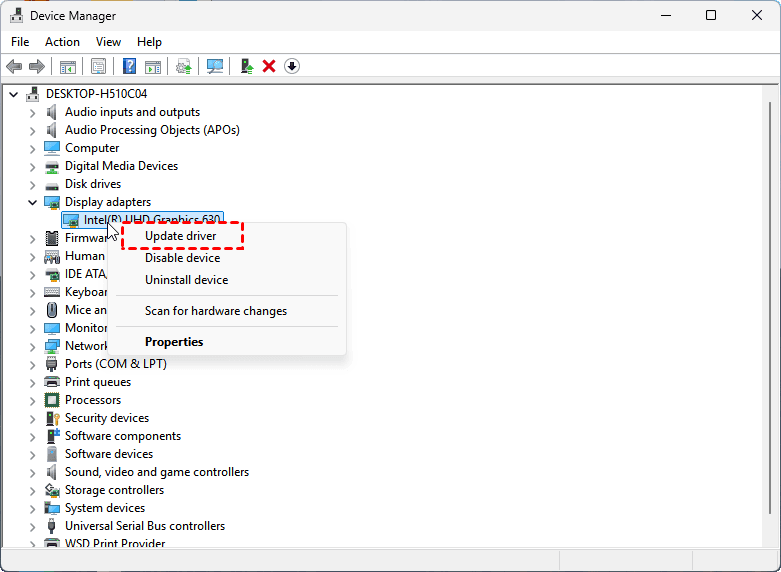
Step 2. Expand Display adapters. Right-click your GPU and choose "Update driver".
If the issue started after a driver update:
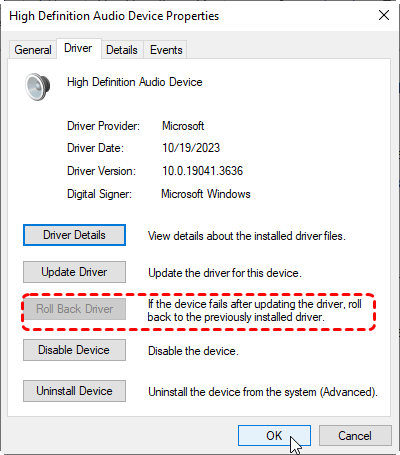
Step 1. Right-click the device and select "Properties".
Step 2. Go to Driver tab and click on "Roll Back Driver".
4. Uninstall Recent Windows Updates
In some cases, a buggy or incomplete Windows update can cause system instability and trigger the Green Screen of Death. Removing the most recent update may restore system stability.
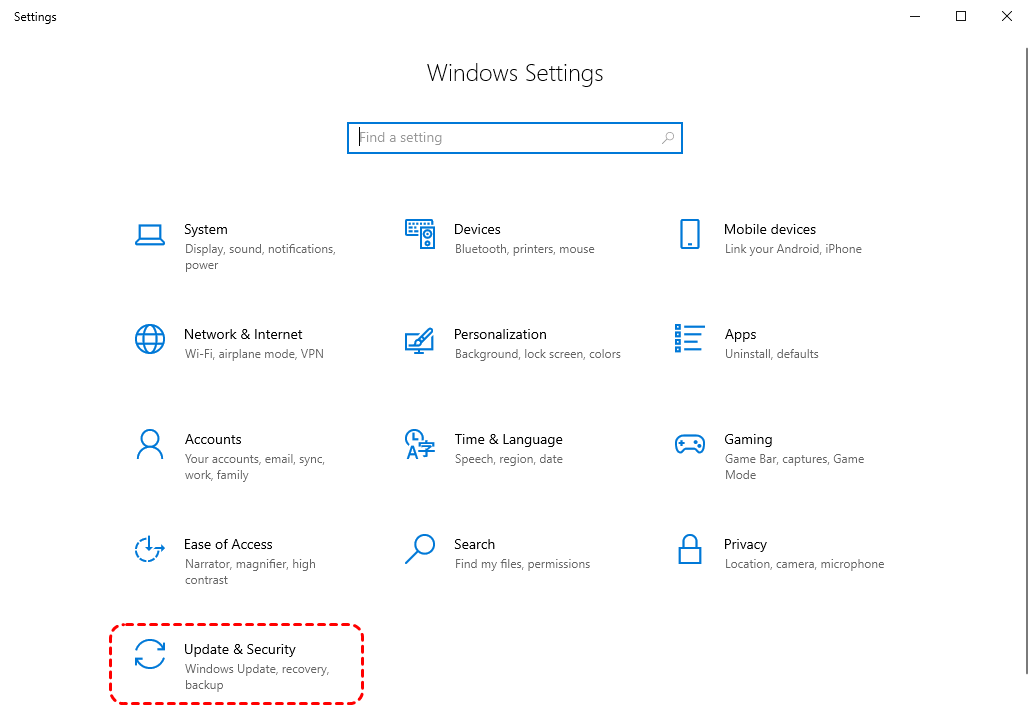
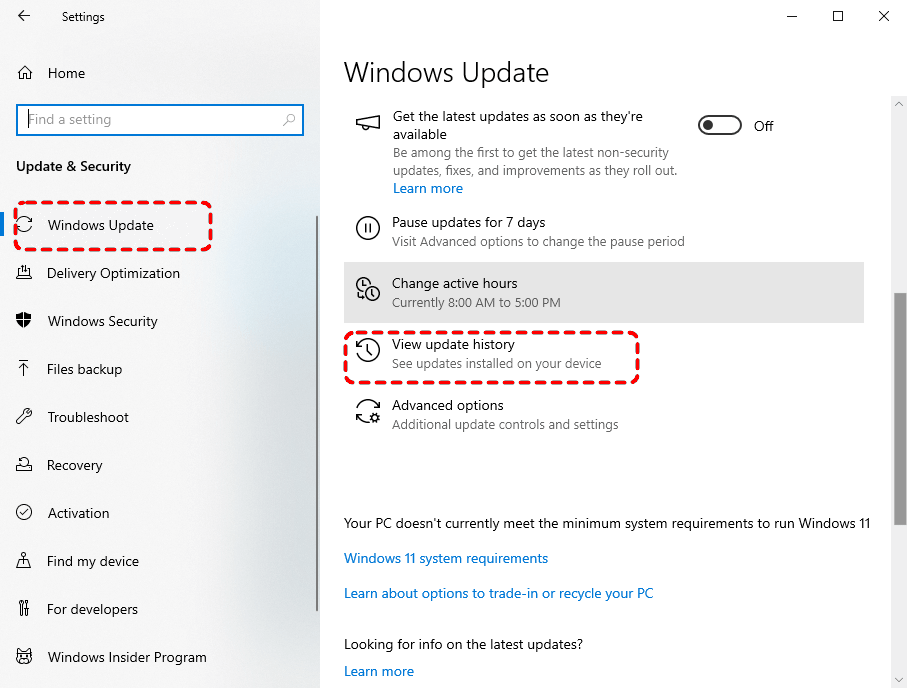
Step 1. Go to "Settings → Update & Security → Windows Update".
Step 2. Click "View update history".
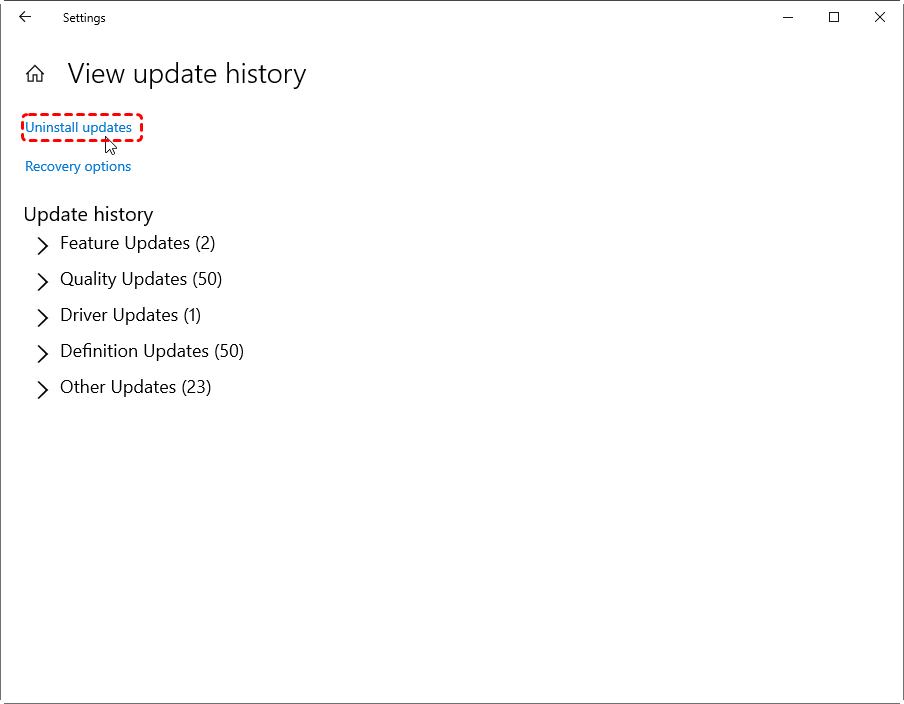
Step 3. Select "Uninstall updates". Remove the most recent update and restart
5. Run System File Checker (SFC)
Also, corrupted system files can crash Windows and trigger Green Screen of Death issue. If so, using SFC tool can help remove the Green Screen.
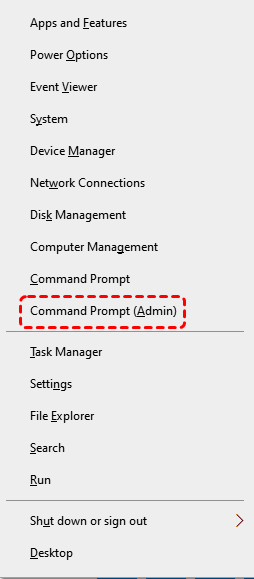
Step 1. Open Command Prompt (Admin): press Win+X and select "Command Prompt (Admin)"
Step 2. Run: sfc /scannow
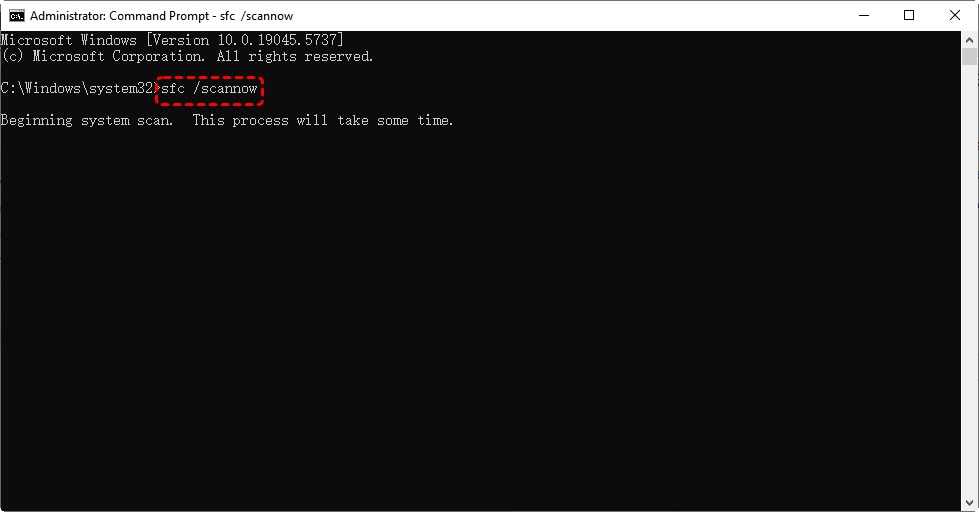
Wait for the scan to complete and restart your PC
6. Check Disk for Errors
When there are file system errors on the boot disk, the Green Screen of Death might also appear during the Windows startup process. To check and repair such disk errors, CHKDSK tool is recommended.
Just run this command in Command Prompt (Admin):
chkdsk c: /f /r
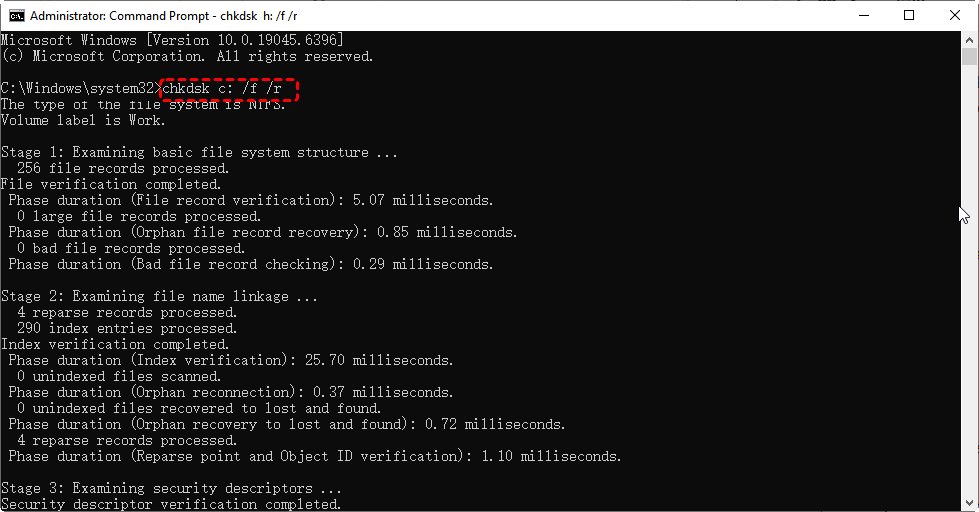
Type Y when prompted and restart to begin scanning.
7. Check and Replace Failing or Faulty RAM
Unstable or damaged memory can cause random crashes and green screens, too. In this situation, do as following:
Step 1. Power off the PC and reseat the RAM modules. Test one RAM stick at a time to identify faulty memory.
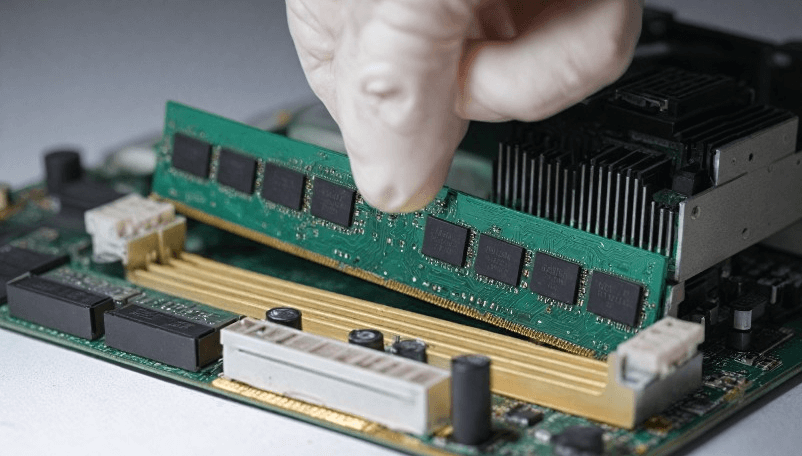
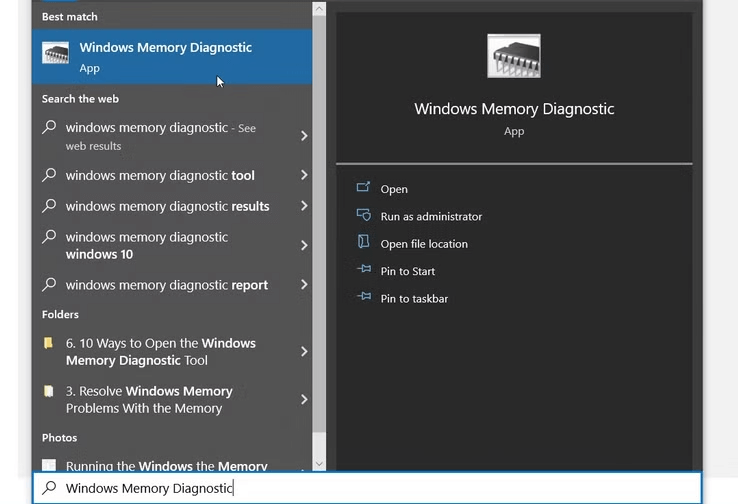
Step 2. Run Windows Memory Diagnostic: Press "Win + R", type "mdsched.exe", and press Enter. Or directly search it.
Step 3. Choose Restart now and check for problems.
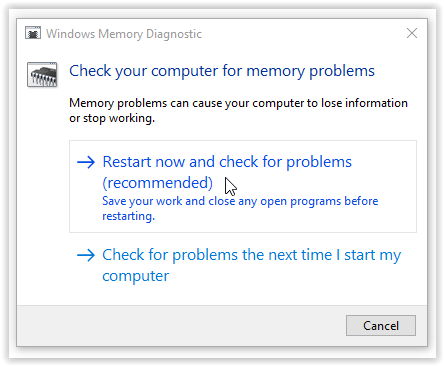
Replace the RAM if errors are detected.
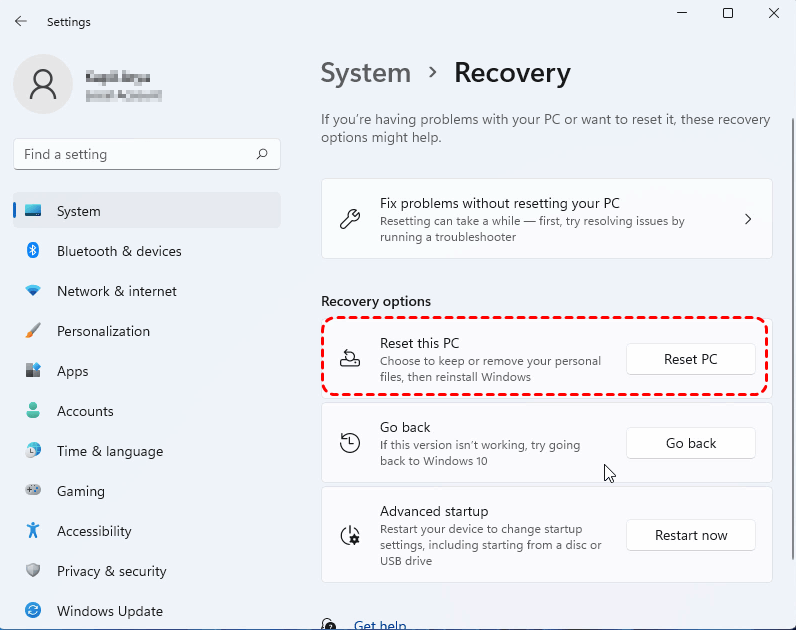
8. Reset Windows 10
If none of the previous solutions resolve the Green Screen of Death, it might be the last choice to reset Windows 10 and keep personal files.
Step 1. Go to "Settings → Update & Security → Recovery".
Step 2. Click "Reset this PC".
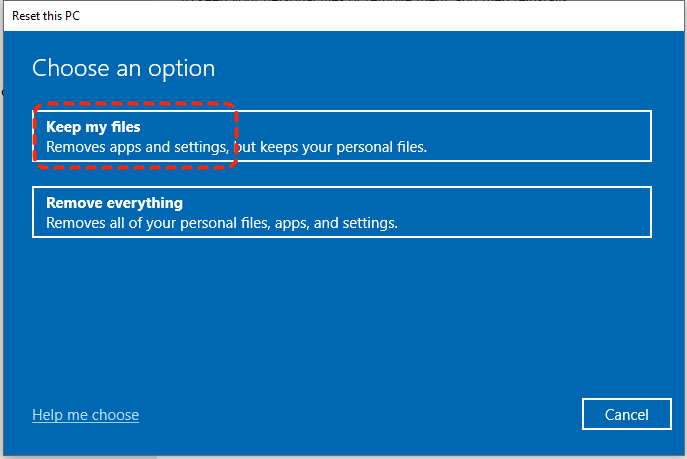
Step 3. Choose "Keep my files"and follow the on-screen instructions to complete the reset.
[Optional] Recover Data Lost Due to Green Screen of Death
Repeated green screen crashes, forced shutdowns, or system resets might result in lost or inaccessible data. If that occurs in your situation: important files are missing after the Green Screen of Death or a Windows reset, using a professional data recovery tool like MyRecover is a wise choice.
 MyRecover
- 👍High Recovery Success Rate: AI-powered algorithms and deep scanning technology to achieve a 99% success rate.
- 👍3-Step Recovery Process: Scan → Preview → Recover, suitable for both technical and non-technical users.
- 👍File Preview Before Recovery: View lost files before recovery to ensure only needed files are restored.
- 👍500+ Devices Supported: SSD, HDD, USB Flash Drive, SD Sard, etc.
- 👍1000+ File Formats Supported: PNG, MP4, MP3, TXT, ZIP, MSG, etc.
- 500+ Data Loss Scenarios: Deletion, Format, System Crash, Virus Attack, etc.
 100% Secure
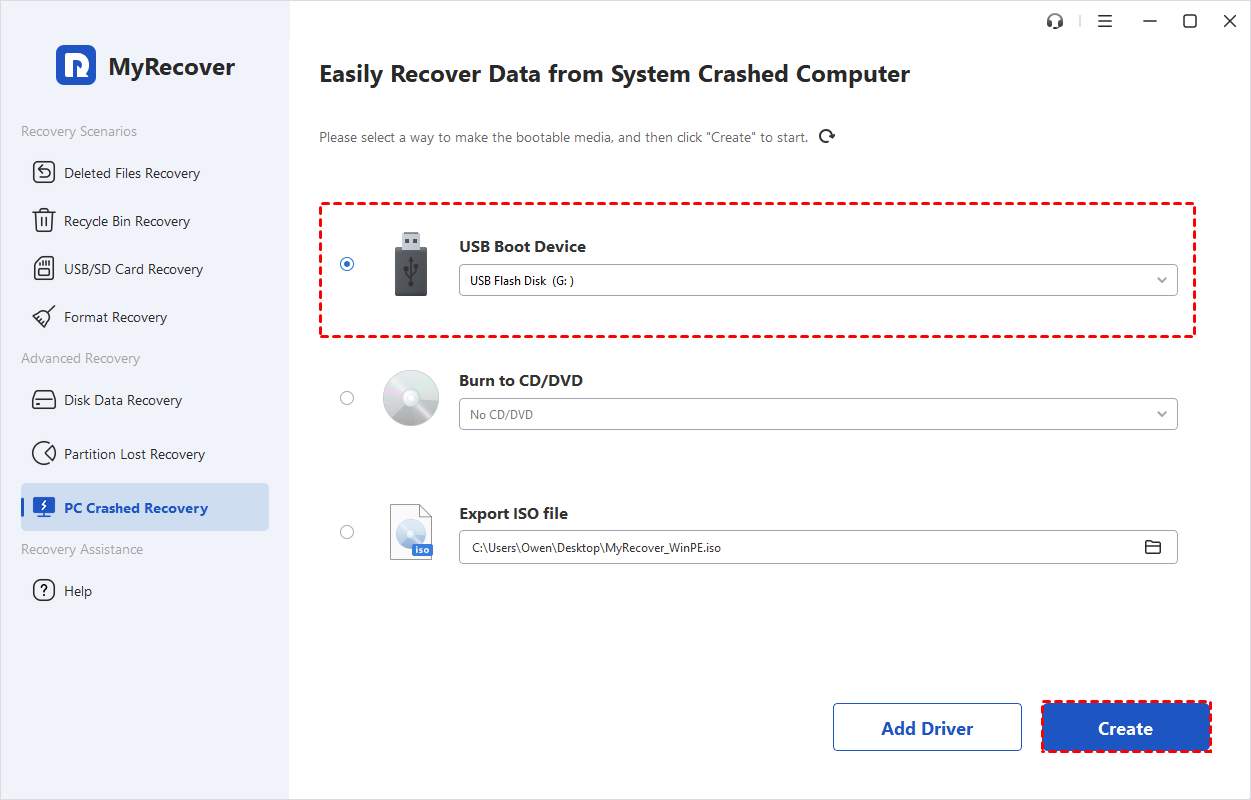
MyRecover can help scan the drive and recover lost files, moreover, do not require any backup. If you cannot access Windows as normal, its "PC Crashed Recovery"feature allows you to create a bootable recovery environment and retrieve data from an unbootable system.
FAQs about Green Screen of Death
Q: Is the Green Screen of Death different from the Blue Screen of Death?
A: Yes. The GSOD usually appears in Windows Insider Preview builds, while the BSOD is more common in stable Windows versions. The color difference helps distinguish test-build crashes from production errors.
Q: Can I fix a Green Screen of Death without losing my files?
A: Yes. Many solutions, like Safe Mode troubleshooting, driver updates, system file checks, or "Reset this PC → Keep my files", allow you to repair Windows while preserving personal data.
Q: Does hardware failure cause GSOD?
A: Yes. Issues like failing RAM, GPU problems, or overheating can trigger a green screen, especially if software fixes don’t resolve the problem.
Q: How do I enter Safe Mode to troubleshoot GSOD?
A: You can enter Safe Mode via Windows Recovery Environment by forcing shutdowns 2–3 times, or through msconfig → Boot → Safe Boot if Windows is partially accessible.
Q: Will uninstalling Windows updates fix the GSOD?
A: Sometimes. If the green screen appeared immediately after a recent update, uninstalling the update may restore stability. You can find this in Settings → Update & Security → Windows Update → View update history → Uninstall updates.

Stay Updated With Our
Latest Tips
Add us as a preferred source on Google to never miss helpful guides.
 Add as preferred source >>