 MyRecover


How to Recover Files from Seagate External Hard Drive (Free & Fast Methods)
Have you ever stared in horror at your Seagate external hard drive, watching your files vanish right before your eyes? Wondering how to recover files from Seagate external hard drive? In this guide, we'll delve deep into the possible reasons behind your Seagate data loss and walk you through proven methods to recover those files.

By Aria / Updated on April 27, 2026


Can Data be Recovered from a Seagate External Hard Drive?
Seagate is one of the most recognized names in the storage industry, offering a wide range of external hard drives that cater to both personal and professional needs. Seagate external hard drives are popular for their reliability, performance, and capacity options, and they serve a variety of use cases including data storage, backups, gaming, and even media editing.
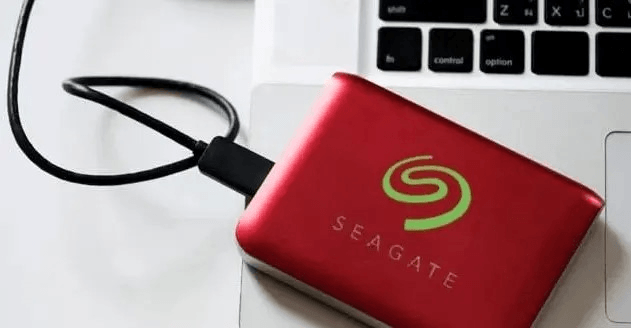
Losing data from a Seagate external hard drive can feel abrupt, especially when important files disappear without warning. Many users are left wondering: Can Data Be Recovered from a Seagate External Hard Drive? The good news is that in many cases, data can still be recovered from Seagate external hard drive, depending on what caused the loss and how the drive has been handled since. Whether files were accidentally deleted, the drive was formatted, or it suddenly became inaccessible, the underlying data is often not immediately erased.
Most Common Causes of File Lost from Seagate External Hard Drive
Losing files from an external hard drive like a Seagate can be frustrating. Understanding potential causes for data loss can help you prevent future issues or recover files from external hard drive. Here are some of the most common reasons files might be lost from Seagate external drive:
- Connection Issues: A faulty connection adapter, outdated drivers, or compatibility issues between the external hard drive and your computer can cause problems when accessing files.
- Human Error: Sometimes, you might accidentally delete important files during the cleanup process; mistakenly formatting the external drive might erase all files on it.
- Overheating: If the external hard drive overheats (especially during heavy use or inadequate cooling), it may fail to function properly, leading to potential data loss or corruption.
- File System Corruption: If the external hard drive is unplugged improperly or suffers a sudden power loss, it may cause corruption in the drive’s file system, making files inaccessible.
- Virus or Malware Infection: Viruses or malware can corrupt or delete files. External hard drives are susceptible to these threats when connected to infected computers or networks.
- Physical Damage: External hard drives are more vulnerable to physical damage because they’re portable. Dropping the drive or subjecting it to shock can damage internal components or cause data corruption.
How to Recover Deleted Files from Seagate External Hard Drive for Free
Data loss on Seagate external hard drives is a frustratingly common experience, caused by the factors mentioned above. But don't panic just yet! There are several methods available to help recover files from Seagate external hard drive, whether they're important work documents, cherished family photos, or irreplaceable projects.
1. Use Professional Seagate Data Recovery Tool: MyRecover [Recommend]
If you need to recover files from a Seagate external hard drive, especially in situations like accidental deletion, formatting, or when the drive is not showing files properly, using a dedicated data recovery tool like MyRecover is often the most effective approach.
MyRecover is designed to handle these real-world data loss scenarios and can scan your Seagate external hard drive directly to locate and restore lost files. It even works even if your Seagate drive is not showing files or appears empty, as long as the data has not been overwritten.
📍 Supports NTFS, FAT32, Ext4, exFAT and more file systems commonly used by Seagate external drives;
📍 Scans and recovers files even when the drive cannot be opened or files are missing;
📍 Uses Quick Scan and Deep Scan to find both recently deleted and deeply lost data;
📍 Detects recoverable files when the drive shows up but appears empty or unreadable;
📍 Handles 500+ data loss scenarios, including deletion, formatting, corruption, and partition issues.
Step 1. Download and install MyRecover on your Windows supported computer. And connect the Seagate external hard drive to the computer.
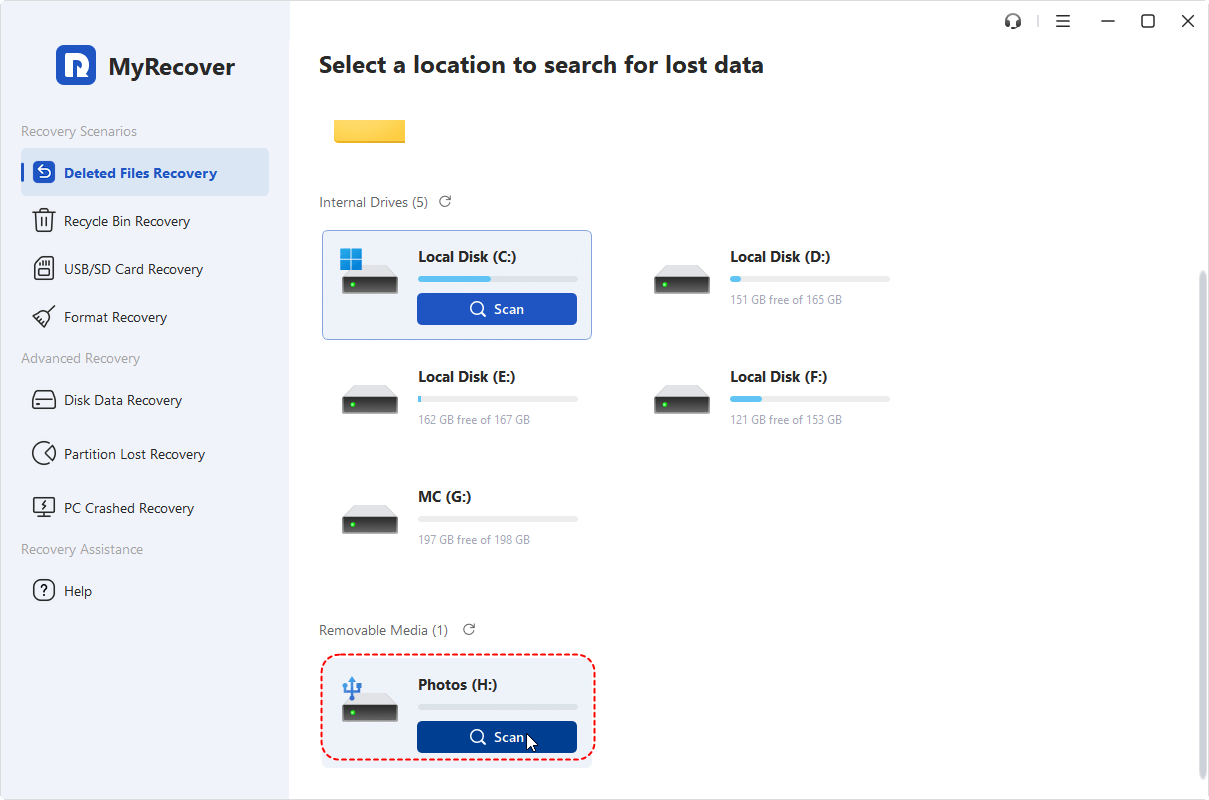
Step 2. Launch MyRecover and select the Seagate external hard drive, click "Scan" to begin searching for lost files.
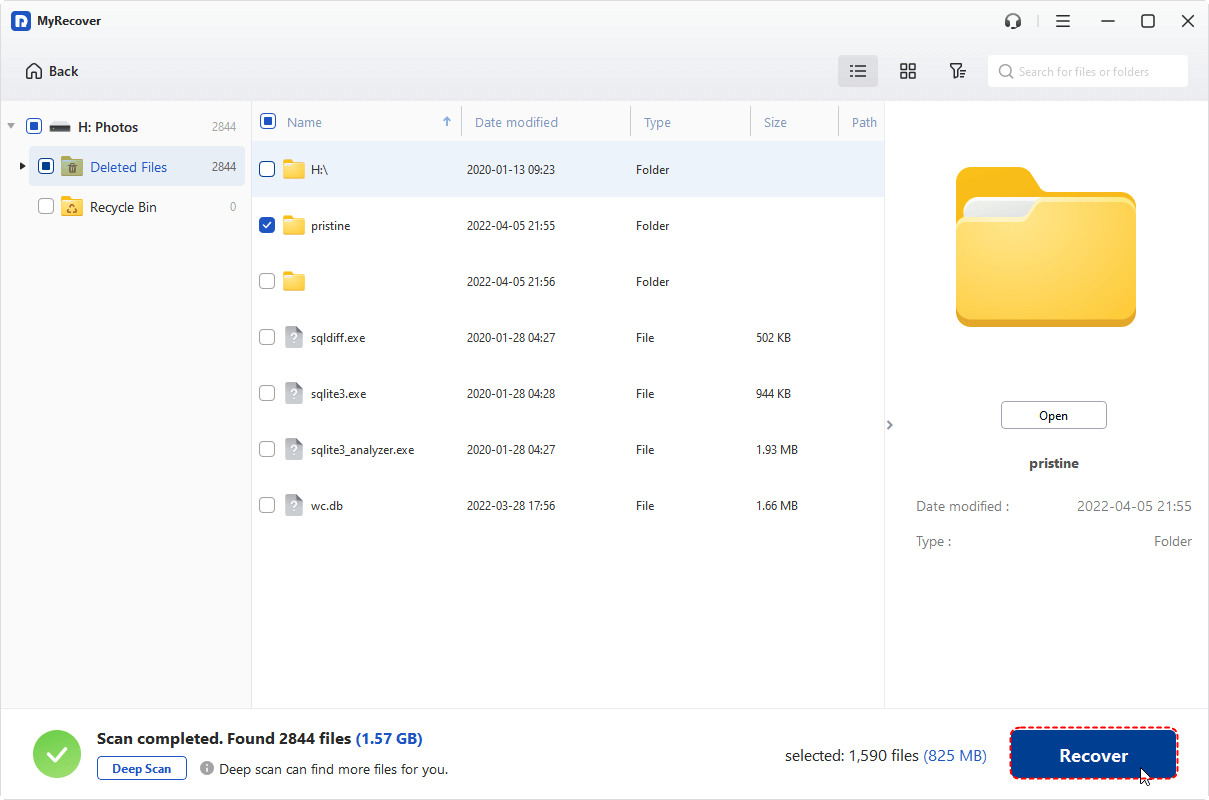
Step 3. Filter the target files by file types and select the files you want to recover from the recoverable lists, then click "Recover".
If the files you need to recover are larger than 500 MB, upgrading to the Professional edition of MyRecover allows unlimited data restoration and file content preview. It also provides the ability to recover files from a unbootable system, making it especially useful when Windows fails to start.
Step 4. Choose a safe location (different from the Seagate external hard drive) to save the files.
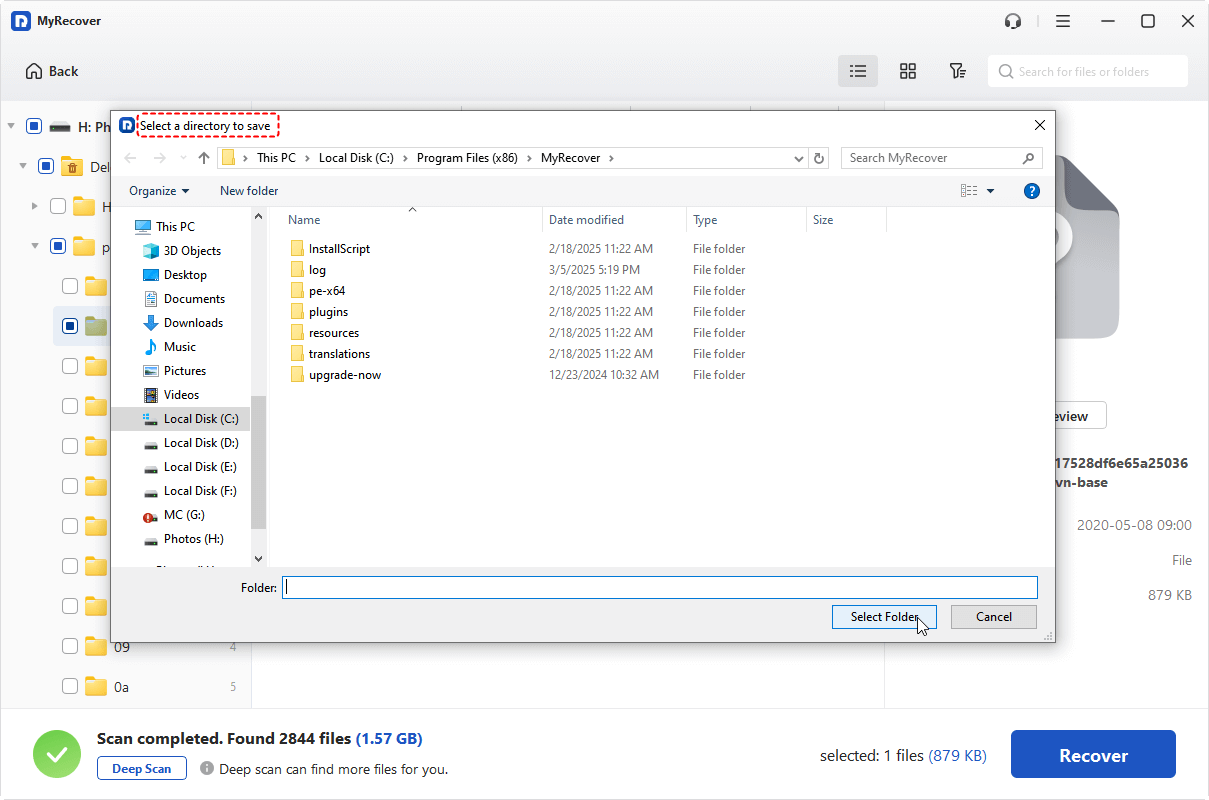
When the message "Your files have been recovered successfully" appears on the screen, you can check the recovered files in destination drive.
2. Try Photorec for Seagate Data Recovery [Command-Line Tool]
If you prefer a completely free solution and are comfortable using a more technical tool, PhotoRec is another option worth trying. It is an open-source data recovery tool that can recover lost files from Seagate external hard drives, even if the drive is formatted or corrupted. But it works through a command-line interface and recovers files based on file signatures. This means it can retrieve many types of files, but it may not preserve the original file names or folder structure.
Step 1. Go to the official website and download the TestDisk & PhotoRec package. Extract the files to a location on your computer. Plug in your Seagate external hard drive and make sure it is detected by your system.
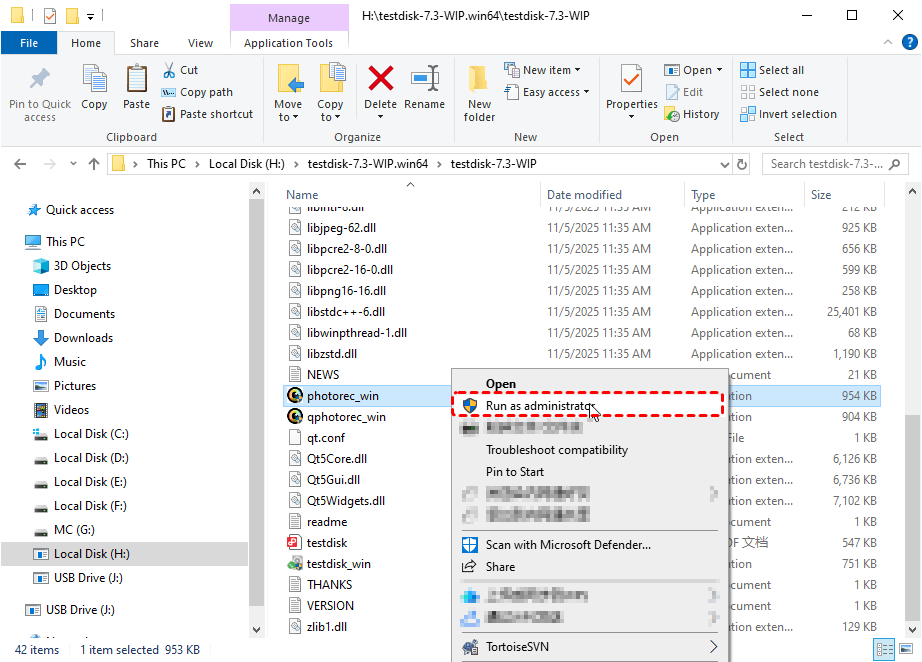
Step 2. Open the extracted folder and run "photorec_win.exe" (on Windows) as administrator. A command-line window will appear.
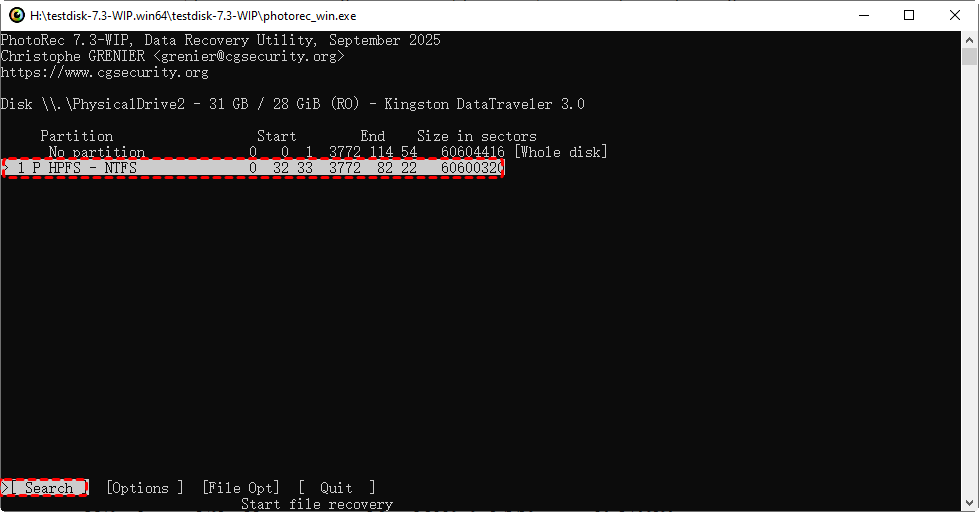
Step 3. Use the arrow keys to select your Seagate external hard drive, then press "Enter". Select the partition where your files were lost with the same way. If unsure, you can choose the whole disk.
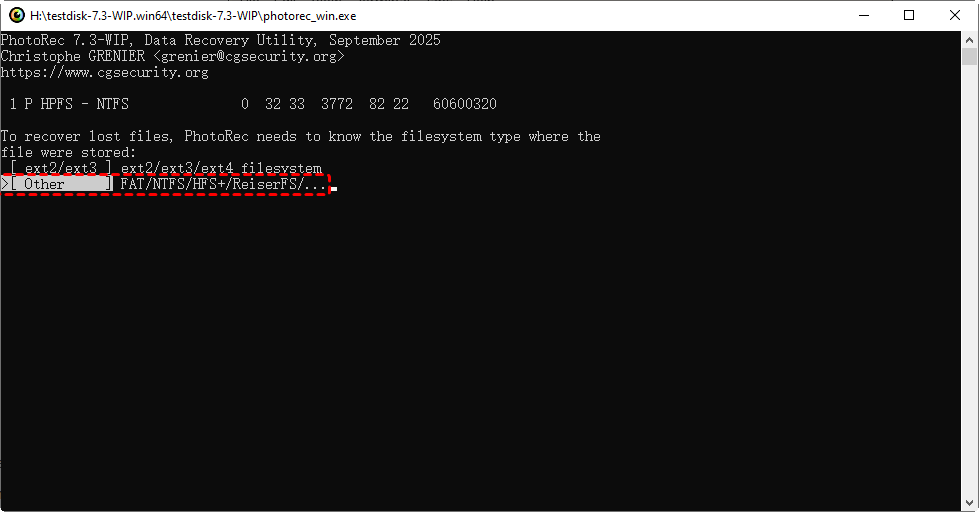
Step 4. Choose the correct file system (usually Other for NTFS/exFAT drives).
Step 5. Select a folder on a different drive to save recovered files (do not save to the same Seagate drive).

Step 6. Press "Enter" to begin the recovery process. PhotoRec will scan and recover files automatically.
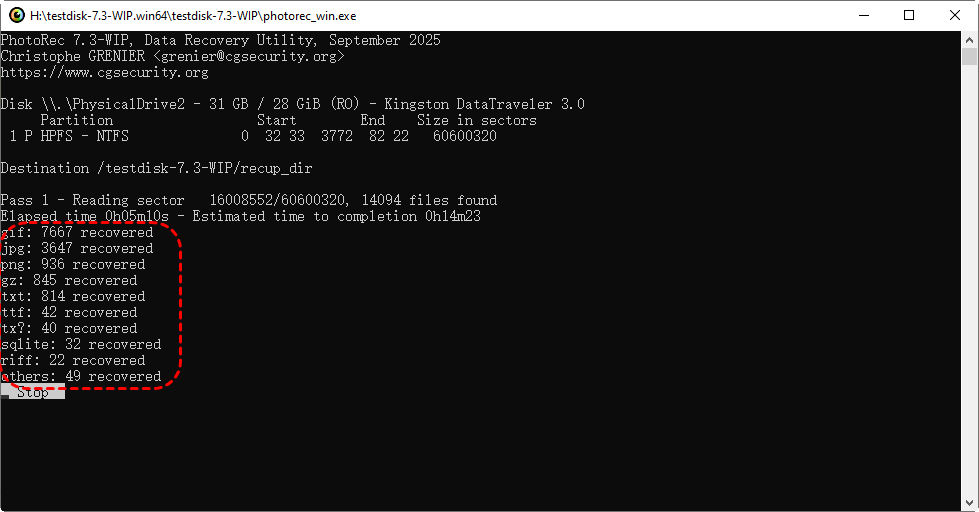
Once the process is complete, you can open the destination folder to check recovered files. Keep in mind that recovered files may be renamed and organized by file type rather than original folders.
3. Run Windows File Recovery Command [Command-Line Tool]
For users who prefer to stick with Windows built-in tools, Windows File Recovery is a free command-line software offered by Microsoft that can help recover deleted files from an external hard drive on Windows. Here's how to recover files using Windows File Recovery command.
Step 1: Download and Install Windows File Recovery from official channel on your computer. Then connect your Seagate external hard drive to your computer using an appropriate cable.
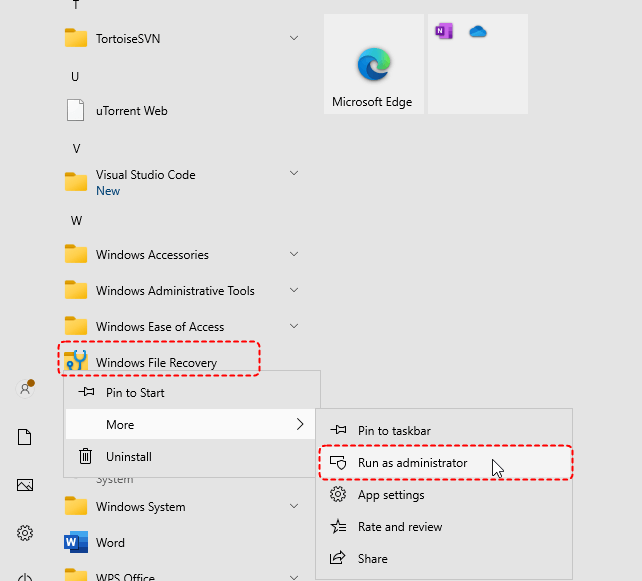
Step 2: Type "Windows File Recovery" in the start menu and run it as administrator.
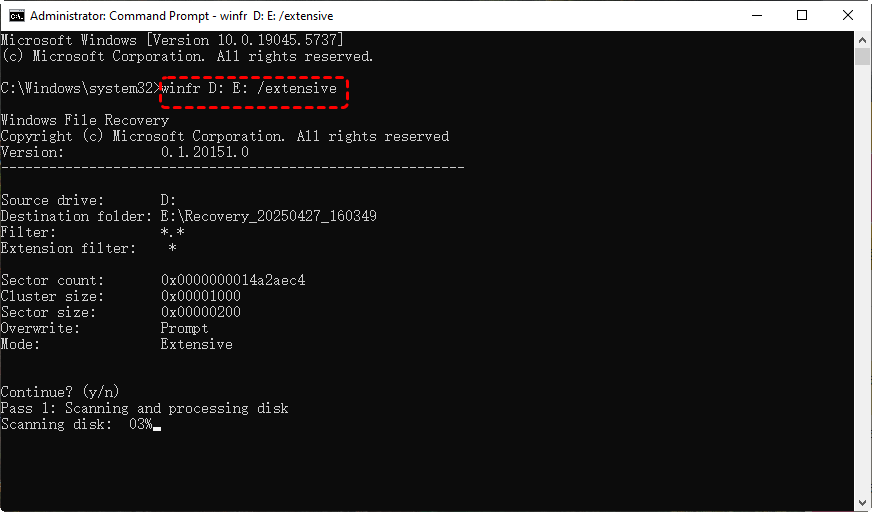
Step 3: Enter the following command Winfr D: E: /extensive in the opened prompt window and press "Enter".
- ★Tips:
- D: represents the source drive letter.
- E: represents the destination drive letter.
- Extensive: the mode-to perform a deep scan to the source drive.
Step 4. When the process is finished, you can press "y" to check the recovered files in the designated folder.
4. Restore Files from Seagate Toolkit [Backup Required]
Seagate Drive Manager (now called Seagate Toolkit) is a free utility software designed to help users manage and maintain their Seagate external hard drives. It provides tools for backup, diagnostics, firmware updates, and drive optimization. If your external hard drive is still operational but you have lost data, this tool can help in some recovery cases.
Step 1. Go to the official Seagate website, Download and install Seagate Toolkit on your computer.
Step 2: Connect the Seagate external drive to your computer and launch Seagate Toolkit. Then it will recognize your Seagate Drive.
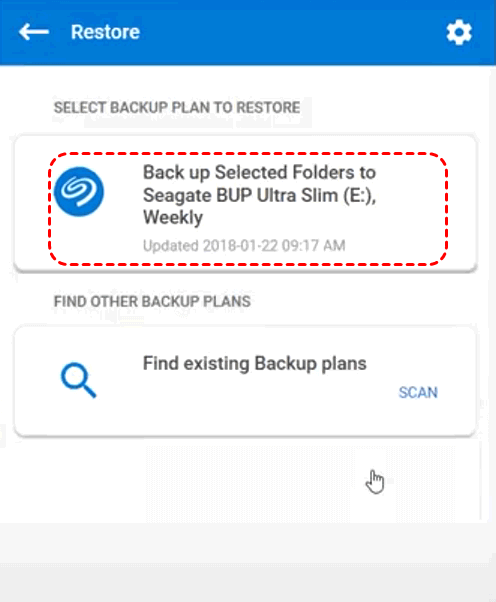
Step 3: Click "Restore" and select a backup which needs to be restored. Restore the entire backup by default. If necessary, you can also choose to restore certain files and specific versions of your files.
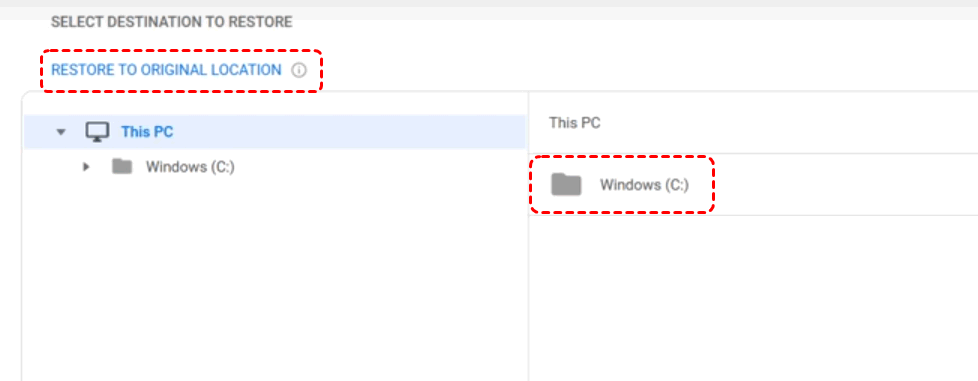
Step 4. Click "Next" to continue the process, then select a destination to restore (restore to original location by default).
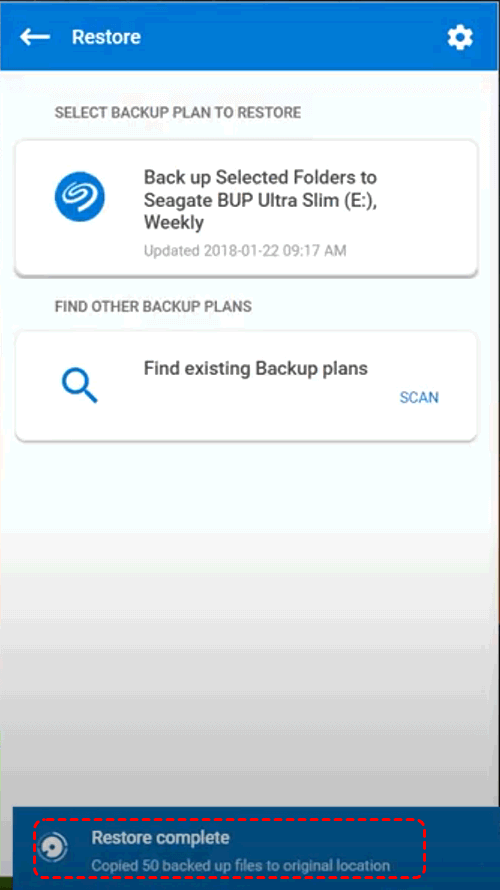
Step 5. Click "Restore" to begin the restore. Once completed message pops up, you can check the recovered files in destination folder.
- Notes:✎...
- This method can only be used when you have created a backup with the Toolkit before the files were lost.
5. Rescue Data Recovery Service
If your Seagate external hard drive has suffered severe physical damage (such as mechanical failure) or you’ve encountered complex data loss situations that among methods cannot works, Seagate Rescue Data Recovery Service is your best option. This is a professional service provided by Seagate itself for data recovery from physically damaged or corrupted drives. It’s a costly service, but it has a high success rate for complex data loss issues.
How to Repair and Recover Seagate External Hard Drive (Make It Work Again)
If your Seagate external hard drive constantly fails to showing files, appears empty, or becomes inaccessible, the issue may not always be permanent data loss. In many cases, the drive may have logical errors such as corrupted file systems, incorrect attributes, or driver issues. You can try the following repair methods to make the drive readable again and restore access to your files.
Fix 1. Use Attrib Command to Show Hidden Files
Sometimes, files on a Seagate external hard drive are not actually lost but become hidden due to virus attacks or system errors. The Attrib command in Windows can remove hidden and system attributes from files, making them visible again. This method is quick and effective if your drive appears empty but still shows used space.
Step 1. Connect your Seagate external hard drive to your computer.
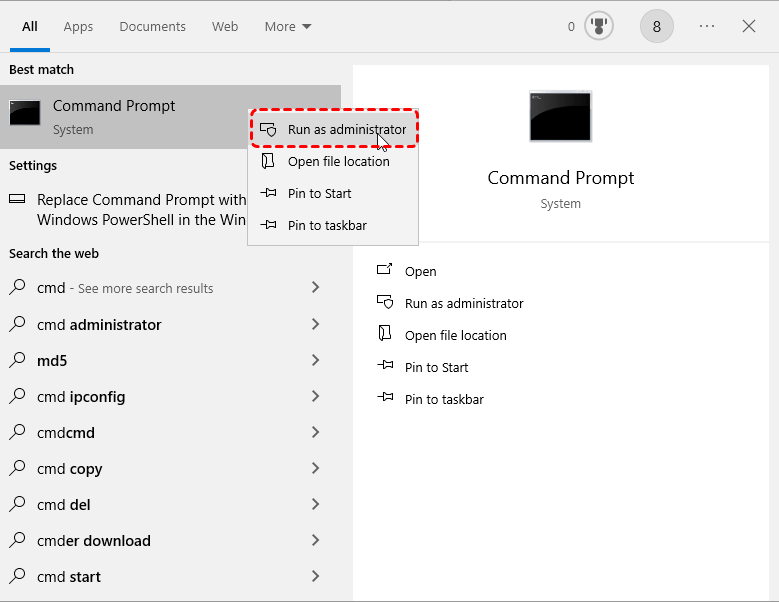
Step 2. Locate Command Prompt in the Start menu and right click on it, then choose "Run as administrator".
Step 3. Type the command "attrib -h -r -s /s /d X:\*.*" (replace X with your Seagate drive letter).

Step 4. Press "Enter" and wait for the process to complete.
Fix 2. Run CHKDSK to Repair File System Errors
If your Seagate external hard drive becomes inaccessible or shows errors, it may be due to file system corruption. The CHKDSK utility can scan the drive for logical errors and repair them, potentially restoring access to files without needing full recovery. This method is suitable when the drive is detected but cannot be opened properly.
Step 1. Connect the Seagate external hard drive to your PC and run Command Prompt as administrator.
Step 2. Type the following command "chkdsk X: /f /r" and press "Enter". Replace X with your actual drive letter.
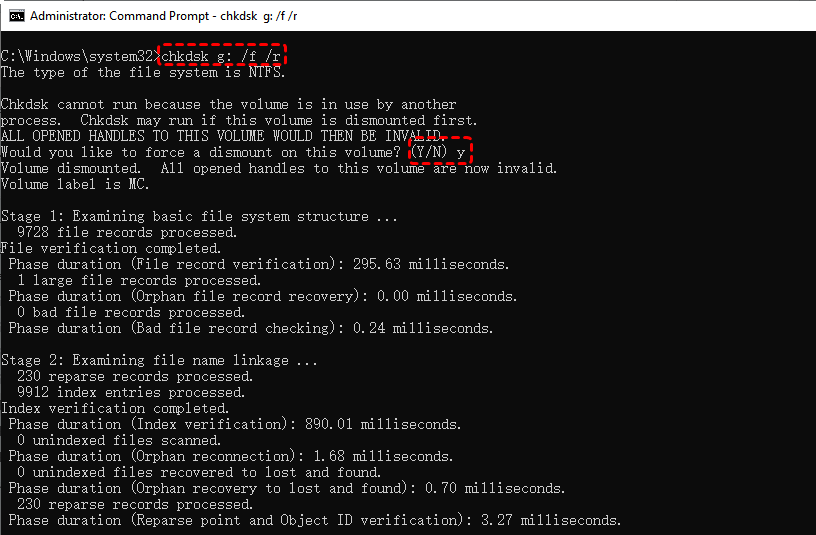
Step 3. Wait for the scan and repair process to finish.
Fix 3. Uninstall and Reinstall Drive
If your Seagate external hard drive is not recognized properly or fails to load, the issue may be related to driver errors. Reinstalling the device driver can help Windows re-detect the drive and fix compatibility issues. This method is useful when the drive does not appear correctly in File Explorer.
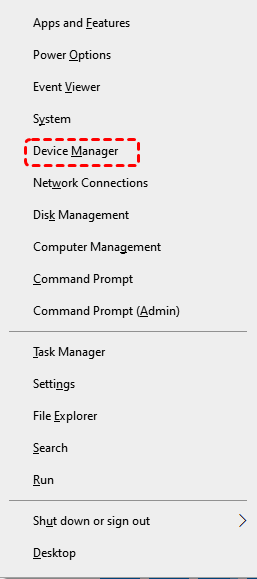
Step 1. Press "Win" + "X" and choose "Device Manager" to open it.
Step 2. Expand "Disk drives" and right click on your Seagate drive, then select "Uninstall Device".
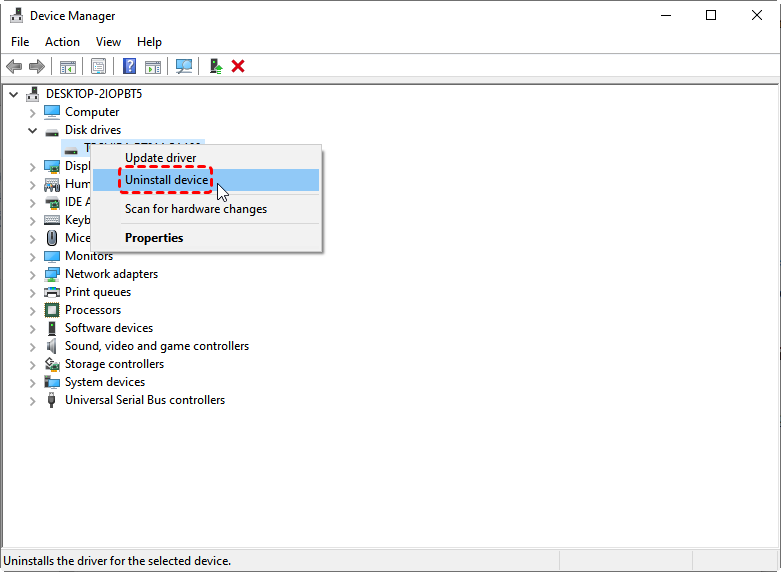
Step 3. Restart your computer and reconnect the drive.
Fix 4. Change Drive Letter
If your Seagate external hard drive appears in Disk Management but not in File Explorer, it may be due to a missing or conflicting drive letter. Assigning a new drive letter can make the drive accessible again without affecting your data.
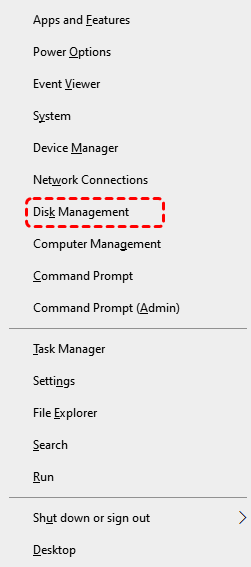
Step 1. Press "Win" + "X" and select "Disk Management".
Step 2. Locate your Seagate external hard drive from the list.
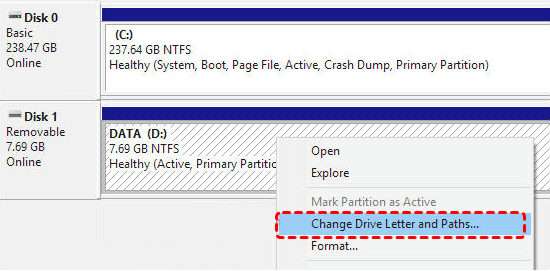
Step 3. Right-click it and select "Change Drive Letter and Paths".
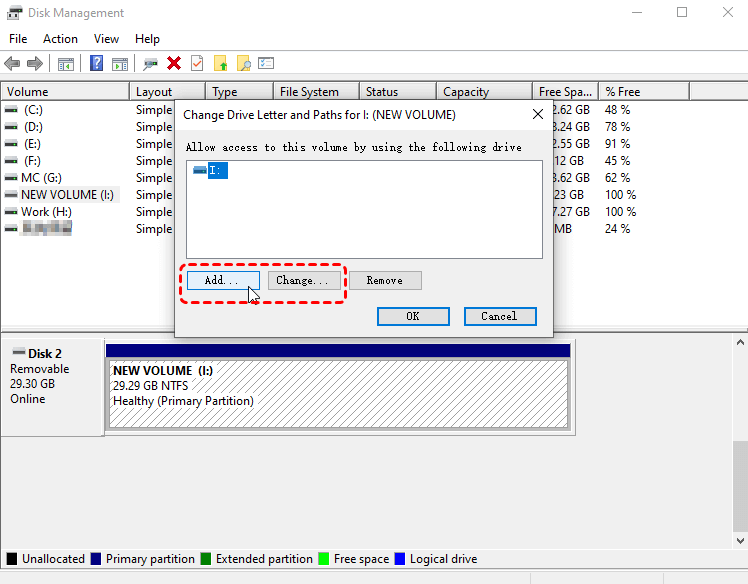
Step 4. Click "Add" or "Change", then assign a new letter.
Fix 6. Format RAW Drive (Last Resort)
If your Seagate external hard drive shows as RAW, it means the file system is severely damaged and cannot be read by Windows. Formatting the drive can restore it to a usable state, but this will erase all existing data. Therefore, it is recommended to recover important files using MyRecover first before performing this operation.
Step 1. Open "Disk Management" and locate the Seagate external hard drive".
Step 2. Right-click the RAW Seagate drive and select "Format".
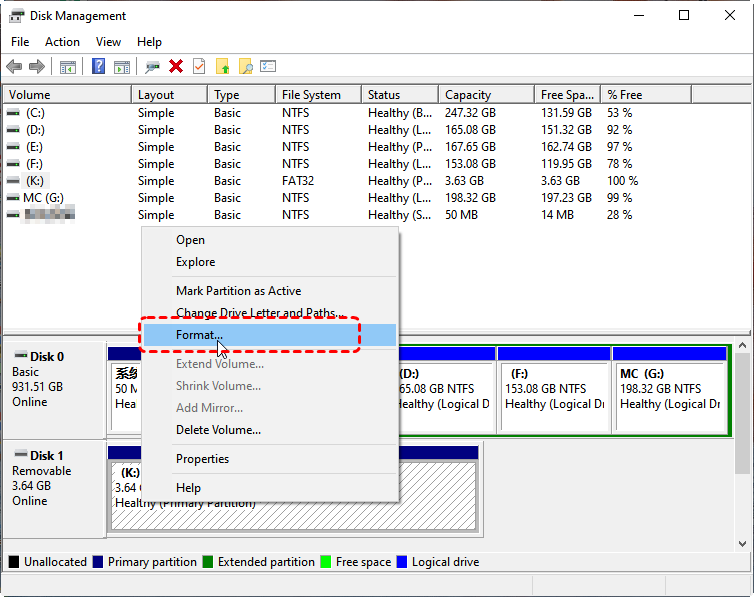
Step 3. Choose a file system (NTFS or exFAT) and click "OK" to start formatting.
Bonus Tips: How to Expand the Life of Seagate External Hard Drive
Now that you’ve learned how to recover lost files from your Seagate drive, it’s equally important to prevent future data loss and extend its lifespan. Proper maintenance and careful handling can significantly reduce the risk of drive failure.
Keep Drive Clean: Dust can accumulate over time and clog the drive’s cooling vents, causing it to overheat. Ensure the drive stays in a dust-free environment, or use a dust cover when it’s not in use.
Proper Eject Procedure: Always eject the drive properly before disconnecting it from the computer. Abrupt disconnections can lead to data corruption or physical damage.
Run Diagnostics and Health Checks: Seagate offers software like SeaTools for testing the health of your external hard drive. Running diagnostics regularly will help you catch any issues before they become serious.
Avoid Physical Shocks: Avoid dropping or bumping the drive. Physical impacts can damage the internal components, especially the hard disk drive (HDD), which is sensitive to shocks.
Summary
This guide provides detailed steps on how to recover files from Seagate external hard drive, covering methods that are adaptable to various situations like using backups, command line tool, third-party software and professional service.
For more complex recovery, such as permanent deletion, inaccessible partition, unbootable drive, crashed system, MyRecover offers reliable solution to recover files. The Professional and Technician version of MyRecover can meet more advanced needs for assisting in data retrieval and repair.
FAQs:
Q1: How much does Seagate external hard drive cost?
The price of a Seagate external hard drive varies by capacity and model. Entry-level drives (1TB–2TB) typically cost around $50–$80, while higher-capacity models (4TB–10TB+) can range from $100 to $250 or more. Portable drives are usually cheaper than desktop versions with external power supplies.
Q2: Can you recover permanently deleted files from an external hard drive?
Yes, permanently deleted files can often be recovered if they haven’t been overwritten. When files are deleted, the system removes their references but leaves the data intact. Using data recovery software like MyRecover promptly increases success. Avoid saving new files to the drive before attempting recovery to prevent overwriting the lost data.
Q3: How to access files from a Seagate external hard drive?
To access files from a Seagate external hard drive, connect it to your computer via USB and open "This PC" or File Explorer. If the drive doesn’t appear, check Disk Management to ensure it’s recognized and has a drive letter. You may also need to update drivers or try a different USB port.
Q4: How to recover formatted Seagate external hard drive data?
To recover data from a formatted Seagate external hard drive, stop using the drive immediately and run a data recovery tool such as MyRecover. Quick formats usually leave data recoverable. Perform a deep scan to locate lost files and restore them to another device. Recovery success depends on whether the data has been overwritten.
Q5: How to recover files from Seagate drive not detected?
If a Seagate drive is not detected, first check connections, cables, and USB ports. Then open Disk Management to see if the drive appears without a letter. If detected, assign a letter or update drivers. Once accessible, use recovery software like MyRecover to scan and retrieve files from the drive.
Q6: How to recover corrupted files from Seagate external hard drive?
Recovering corrupted files depends on the extent of damage. First, try accessing them with different programs or repairing minor disk errors. If files are severely damaged, recovery software like MyRecover may help retrieve intact versions. However, if critical data is missing, full repair may not be possible, and only partial recovery can be achieved.

Stay Updated With Our
Latest Tips
Add us as a preferred source on Google to never miss helpful guides.
 Add as preferred source >>