 MyRecover



Norton Deleted Files Without Asking: How to Fix and Prevent It
Wondering how to make Norton not delete a file automatically? This guide helps you recover important data, adjust Norton’s settings, and prevent future file loss. Perfect for users tired of seeing Norton remove files without permission.

By Vera / Updated on May 20, 2026


Introduction: What to Do When Norton Deleted Files Without Asking

It’s a common yet startling scenario: you’ve just downloaded a project, unzipped a game, or connected an external drive, only to find that Norton deleted files without asking. While we rely on antivirus software to be our digital bodyguard, sometimes that bodyguard becomes overzealous, treating safe files like intruders.
This behavior is usually linked to Norton’s real-time protection protocols. If the software deems a file "suspicious" based on its signature or behavior, it may bypass the confirmation stage to "protect" the system immediately. In this guide, we will explore why this happens, how to make Norton not delete a file, and how to restore a file Norton deleted (the best 2 methods) —even if it seems permanently gone.
Why Norton Deletes Files Without Asking
Before jumping into the fixes, it is crucial to understand the logic behind Norton’s actions. This helps you identify whether a deletion was a "False Positive" or a genuine security save.
Norton keeps deleting all the game files... :(
I just got a shiny new laptop, but unfortunately it came with windows 10 and now Norton keeps deleting all the DF game files 1 by 1 every time I unzip the file. WTF?! How do I make it stop? What's the best alternative these days? Many thanks in advance for all the help.
- Question from Reddit
Understanding Norton’s Auto-Protect Feature
Norton’s Auto-Protect feature runs in real-time, scanning everything you open or download. When it detects what it thinks is a threat, it acts immediately—sometimes too quickly. This can cause Norton to delete or quarantine files it mistakenly identifies as harmful.
The Role of SONAR and Heuristics
SONAR (Symantec Online Network for Advanced Response) and heuristic scanning analyze how programs behave. If a file acts "suspiciously", Norton flags it—even if it’s actually safe. This behavior-based detection is powerful but not perfect.
False Positives: When Safe Files Get Flagged
Sometimes, perfectly safe programs—like custom scripts, small apps, or downloaded tools—trigger false alarms. Norton sees them as “potentially unsafe” and removes them without asking. It’s annoying, but it’s also fixable.
How to Make Norton Not Delete a File Automatically (Prevention Methods)
If Norton is interfering with your workflow, you need to shift the balance from "Automatic Protection" to "User-Controlled Protection." Here are the two most effective ways to stop the software from acting unilaterally. Now, let’s stop it!
Method 1: Turn Off Auto-Delete in Norton Settings
Norton allows you to change how it handles suspicious files. Instead of auto-deleting, you can keep a file out of quarantine.
Step-by-Step Guide to Adjust File Handling
1. Open your Norton app.
2. Go to Settings > Antivirus > Scans and Risks.
3. Find the options you want to turn off.
4. Toggle it off and set it to Ask Me.
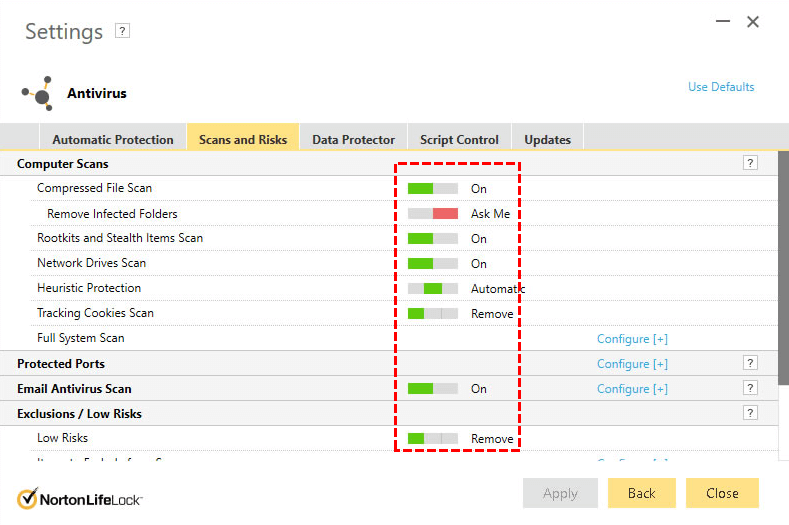
5. Click Apply. Now you have successfully learned how to make Norton not delete a file by forcing it to request permission.
Now, Norton will notify you before removing the corresponding file.
Method 2: Add Files or Folders to Exclusions
If you have a specific folder (like a Steam library or a development folder) that you know is safe, you can tell Norton to "ignore" this area entirely. This is the most reliable long-term fix for "safe" software.
How to Create Exclusion Lists
1. Open Norton’s Settings.
2. Navigate to Antivirus > Scans and Risks.
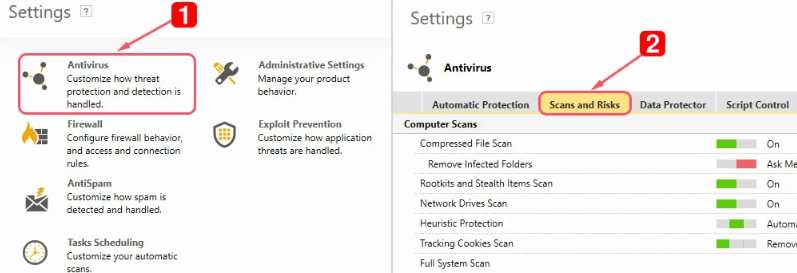
3. Click Configure next to Items to Exclude from Scans and Items to Exclude from Auto-Protect.
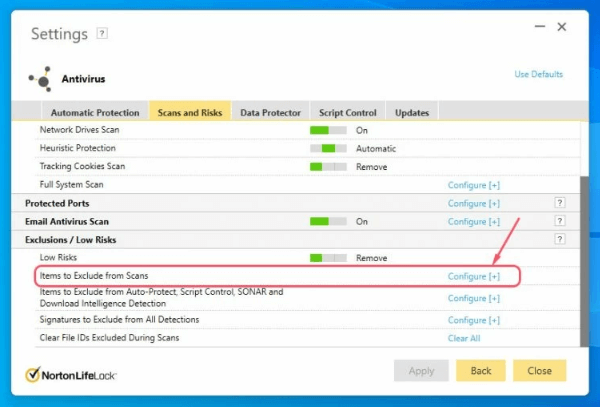
4. Add your file or folder path, then save your changes.
Once these exclusions are set, Norton will treat those paths as "trusted." However, if the damage is already done, you need to know how to restore a file Norton deleted.
How to Restore a File Norton Deleted
How to recover deleted files? There are two possible solutions. When a file disappears, it is usually moved to a hidden, encrypted folder called the "Quarantine." If it’s not there, you will need to use data recovery software.
1. Recover from Norton’s Quarantine
When Norton deletes a file, it usually moves it to quarantine first. You can safely review and restore it if you’re sure it’s not a real threat. Use these steps for how to restore a file Norton deleted:
Steps to Restore a Quarantined File
1. Open Norton Security.
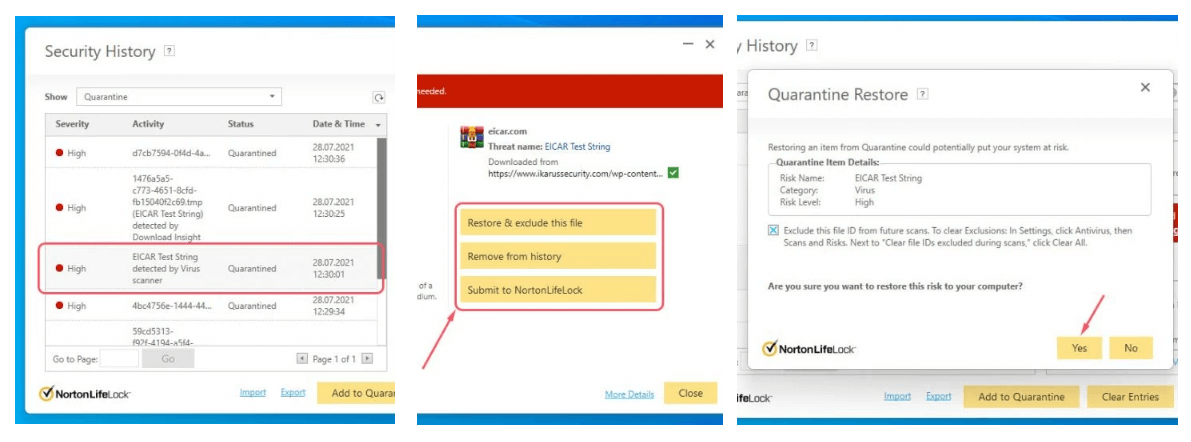
2. Go to Security > History > Quarantine.
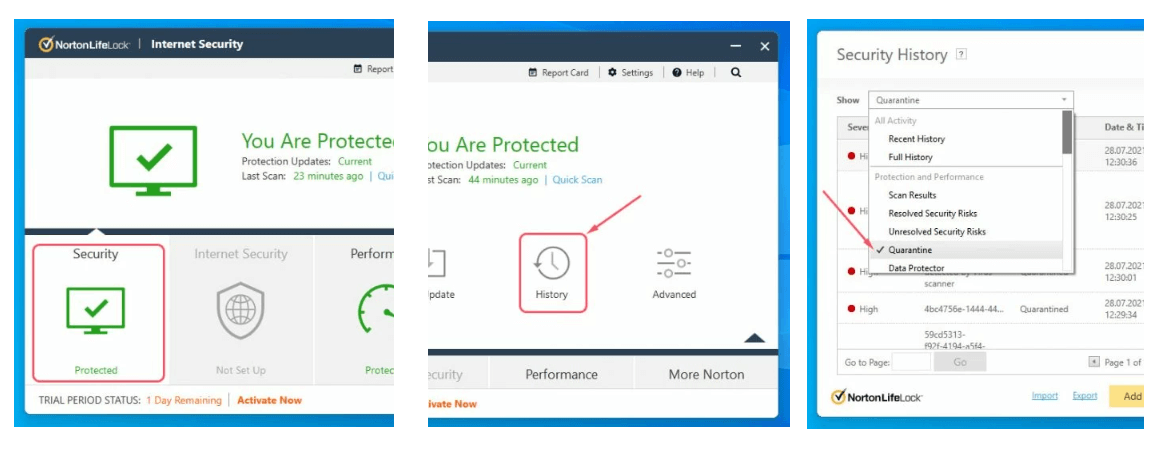
3. Review the list for your missing file.
4. Select the file, click Options, and then click Restore & Exclude this file.
5. Add it to the exclusion list to prevent future deletions. Then click Yes.
2. Norton Deleted My Files: How to Recover Permanently Lost Data
Sometimes, Norton bypasses the quarantine and permanently deletes a file, or the quarantine is cleared during a system cleanup. If you find that Norton deleted my files, how to recover them becomes your top priority.
Unlike standard backup tools, MyRecover is designed to retrieve data that has been forcefully removed from the file system. When Norton "deletes" a file, the data remains on the disk until overwritten by new information. MyRecover utilizes advanced scanning algorithms to identify these lost sectors, making it ideal for:
-
🔖Restoring .exe, .dll, and .sys files that Norton often targets.
-
🔖Recovering files deleted from external drives or USBs where Norton’s quarantine may not be active.
-
🔖Retrieving data after a "Hard Delete" where the file bypassed the Quarantine entirely.
 100% Secure
Here’s how to use it:
1. Download and install MyRecover on your PC.
2. Launch it and choose the drive where the deleted file was located.
3. Click Scan and then let the tool scan automatically.
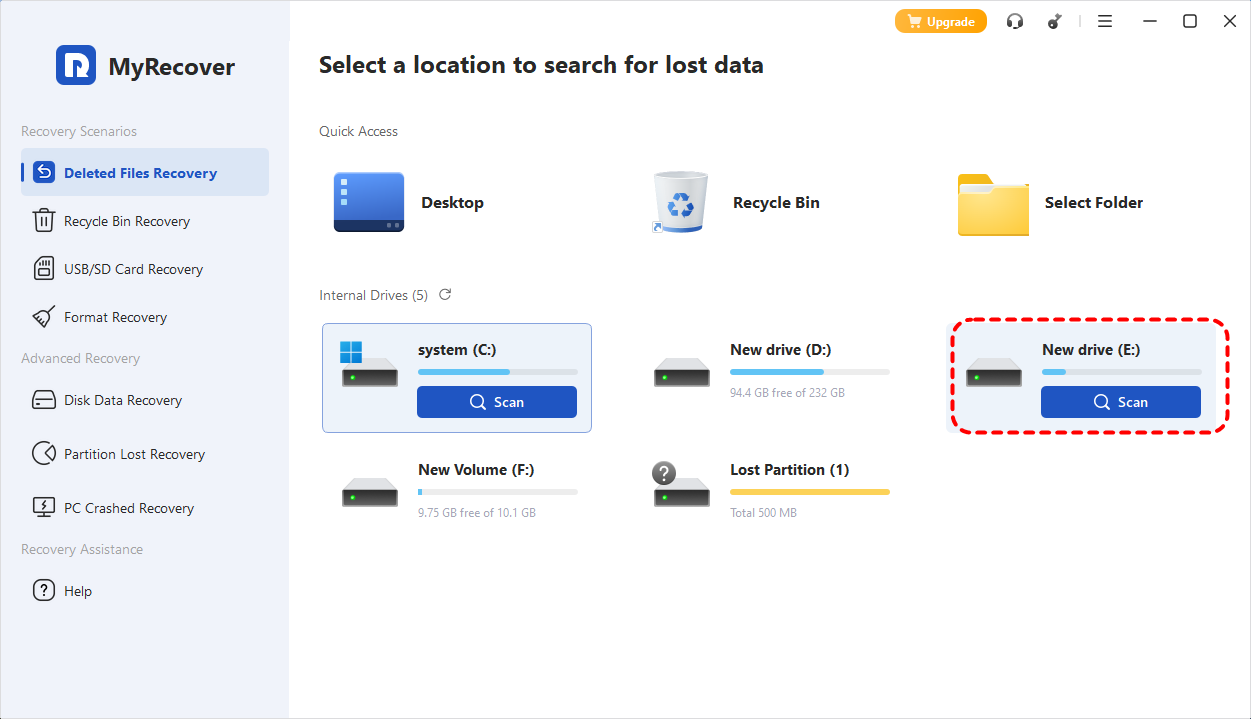
4. Preview the results and recover your files instantly.
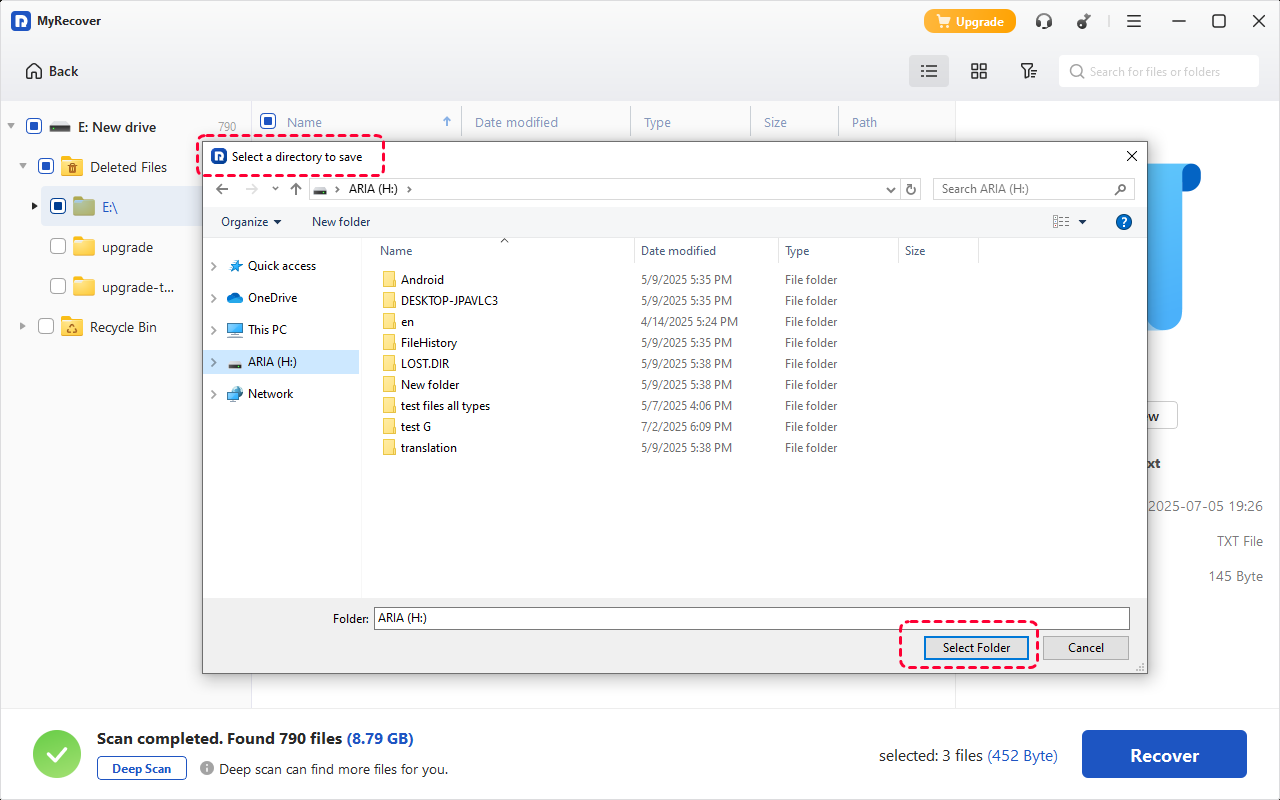
MyRecover is safe, easy to use, and compatible with all major file types.
Tips to Prevent Norton from Deleting Safe Files
Keep Norton Updated
Regular updates ensure that Norton’s virus definitions stay current. The more accurate its database, the fewer false positives you’ll experience.
Regularly Review Quarantine Items
Don’t ignore Norton’s quarantine folder. Check it occasionally—you might find important files that were wrongly flagged.
Backup Important Data Frequently
Always back up important data, either using cloud services or external drives. That way, even if Norton (or any antivirus) removes something vital, you can restore it easily.
Conclusion
Finding that Norton deleted files without asking can be infuriating, but it’s not the end of the world. You can tweak Norton’s settings, exclude safe files, and use tools like MyRecover to get your data back in minutes. With a few smart adjustments and regular checkups, you can enjoy Norton’s protection without losing your valuable files again.
Frequently Asked Questions (FAQ)
1. How to make Norton not delete a file that I downloaded from the internet?
Norton uses "Download Intelligence." If a file has a low "reputation" (not many people have downloaded it), Norton may delete it. You can disable "Download Intelligence" under Settings > Antivirus > Scans and Risks, though it is safer to simply exclude your "Downloads" folder.
2. Norton deleted my files: how to recover them if they aren't in the Trash?
Norton deletions never go to the Windows Recycle Bin; they go to the Norton Quarantine. If the Quarantine is empty, the file is logically deleted from the drive. You must use a tool like MyRecover immediately before the disk space is overwritten by new data.
3. How to restore a file Norton deleted that was part of a Windows System folder?
Be careful! If Norton deletes something in C:\Windows, it might be a genuine Trojan. If you are sure it is safe, use the Norton History > Quarantine method to restore it with administrative privileges.
4. Can MyRecover retrieve files deleted by other antivirus programs like McAfee or Windows Defender?
Yes. MyRecover works independently of your antivirus. It scans the file system for any data marked as deleted, whether it was removed by Norton, another antivirus, or accidental manual deletion.
5. Is it safe to exclude my entire "C:" drive to stop deletions?
No. Excluding your entire drive would effectively turn off Norton's protection. Only exclude specific, trusted folders (like C:\Games or C:\Work) where you frequently experience false positives.
6. Does MyRecover support deep scanning for large game files?
Absolutely. MyRecover features a "Deep Scan" mode that reconstructs large files by scanning the disk's data clusters, ensuring that even large game assets or video files deleted by Norton can be recovered intact.

Stay Updated With Our
Latest Tips
Add us as a preferred source on Google to never miss helpful guides.
 Add as preferred source >>