 MyRecover


How to Fix SD Full and Inaccessible Error in Minutes -Complete Guide
Stop struggling with storage issues. Here's how to fix SD full and inaccessible error on cameras, phones, and PCs. We tackle scenarios where sd card is full or not accessible, plus android-specific fixes. Includes recovery methods for sd card is not accessible the file or directory is corrupted and unreadable situations.

By Delores / Updated on March 3, 2026


SD Full and Inaccessible Error!
You're trying to snap a photo on your Android phone, and a message pops up: "SD card is full or not accessible". However, there's plenty of space left. Or maybe you've plugged your memory card into your computer, only to be greeted by the error: "SD card is not accessible. The file or directory is corrupted and unreadable".
Don't worry, most of the time, you can fix SD full and inaccessible error without losing your precious data. Let's dive in and get your card back in fighting shape.
Why Your SD Card Shows Full But Has No Files
When your device displays the SDcard is full or not accessible warning, something has gone wrong internally. This error typically stems from file system corruption, meaning the data structure that organizes where files are stored has become damaged.
The file system tracks file locations on your card. When this directory becomes corrupted, your device cannot locate any files, even though the data remains physically present on the card. This explains why the card appears fullbut has no files, yet you cannot access anything.
File system corruption can cause your device to misread the card's capacity entirely. A 64GB card might show as full when only 10GB is used, or appear empty despite containing valuable data. This occurs because the file allocation table (FAT)—responsible for tracking used and available space—becomes damaged.
Understanding the SD Full and Inaccessible Error
The SD is full and inaccessible error can occur due to various reasons:
- Insufficient storage space
- File system corruption
- Physical damage to the SD card
- Compatibility issues
To resolve this problem, continue reading for detailed solutions and operation steps.
Recover Files from SD Card That Shows Full and Inaccessible
When your SD Card shows SD Card is full or not accessible, the first thing you should do is to recover files from that SD card in case of data loss if that card holds anything you care about—photos of your kids, work documents, vacation videos.
Fortunately, the powerful Windows data recovery software MyRecover is your best choice right now.
- This user-friendly tool pulls data from corrupted, formatted, or otherwise inaccessible SD cards without breaking a sweat.
- Its advanced scanning engine digs deep into corrupted file systems, pulling out data that Windows itself can't see.
- Supporting over 1,000 file types and working with FAT32, exFAT, and NTFS formats, it's built for exactly these nightmare scenarios.
- It’scompatible with all Windows versions, Windows XP, Vista, 7, 8, 8.1, 10,11 and Windows Servers, it's got you covered no matter your setup.
Check the simple guide to recover files from an SD card that is full and inaccessible in Windows 10/11 with MyRecover:
1. Please download and install MyRecover on your computer. And connect your SD card to ensure it can be detected.
 100% Secure
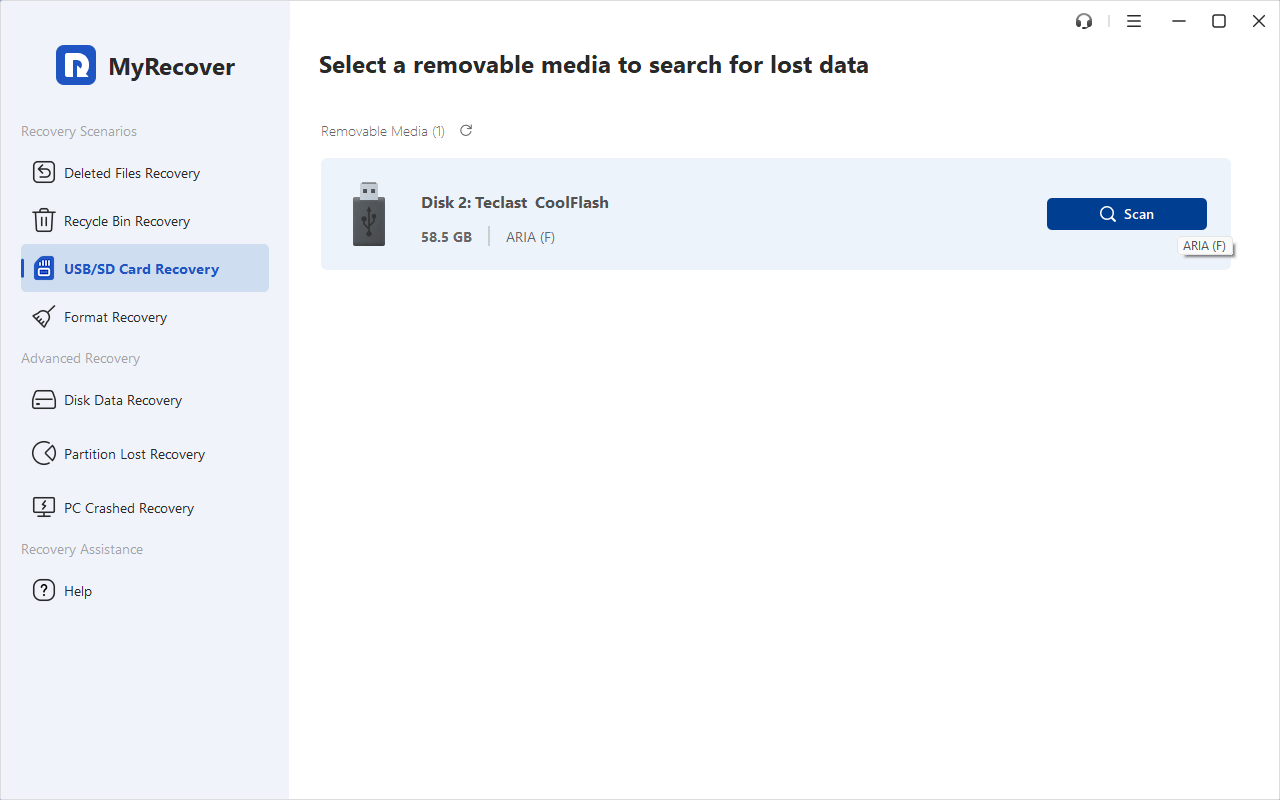
2. Tap USB/SD Card Recovery, choose your problematic SD card, and hit Scan. Wait for it to finish.
3. Preview and select the files you need, and hit Recover.
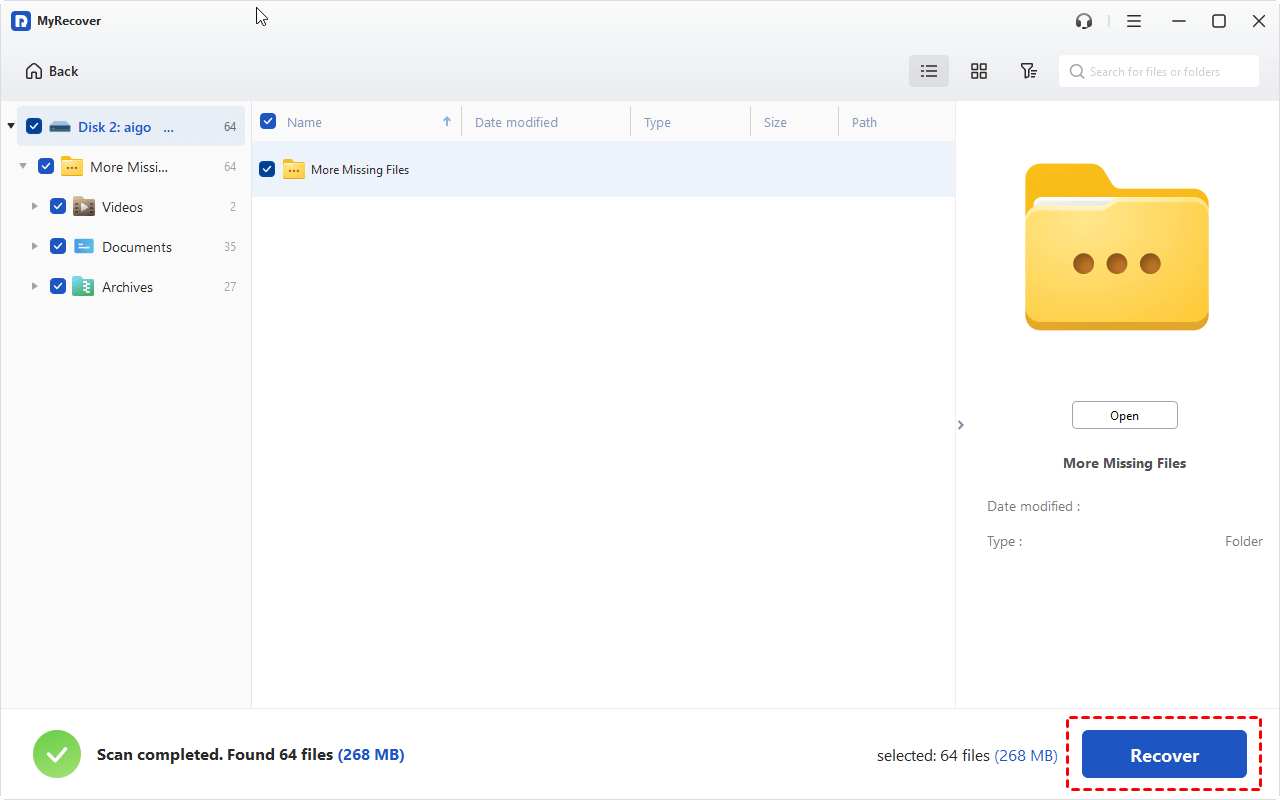
4. Opt for a safe location to keep them.
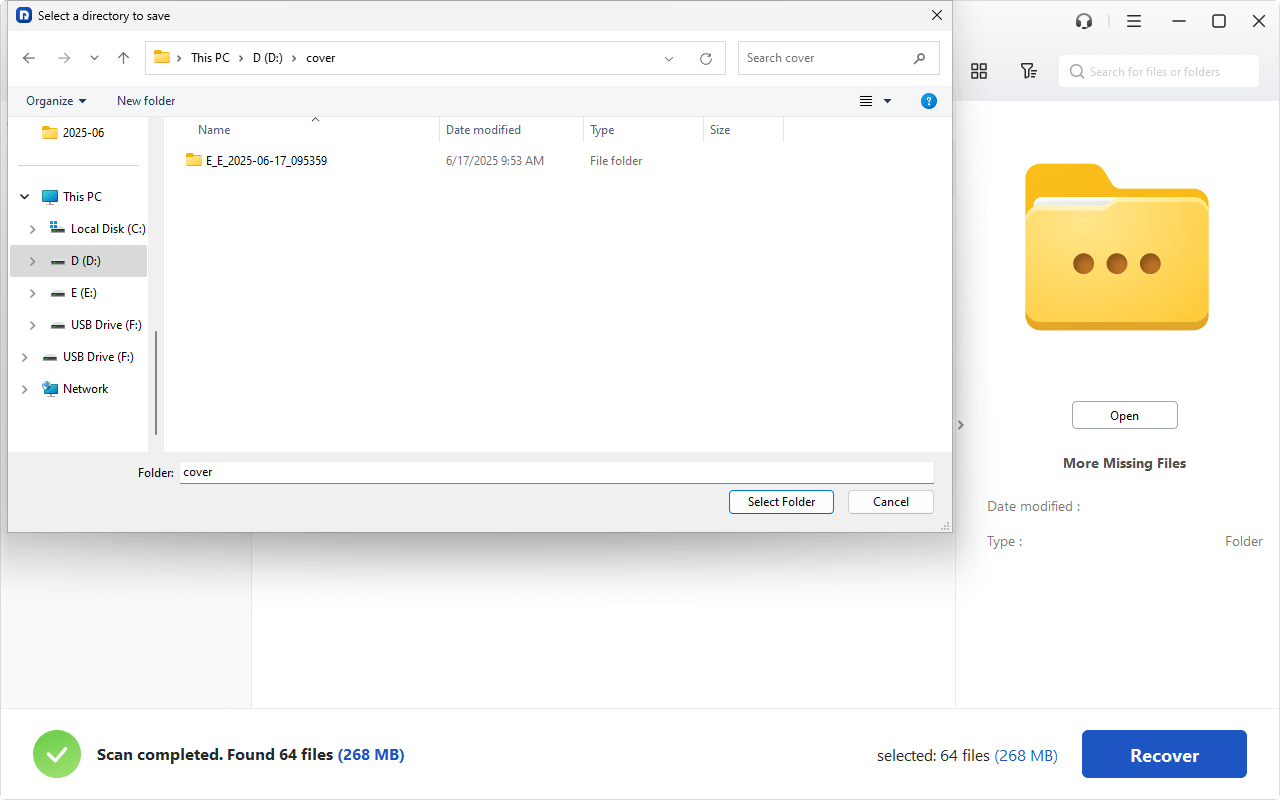
- Notes:✎...
- By default, MyRecover will perform a Quick Scan, zipping through recently deleted files and easily accessible data. But if your card is seriously corrupted, don't worry—it automatically runs a Deep Scan. This thorough search digs through every nook and cranny of the card, finding files that other tools might miss.
- Preview before recovery. This is where MyRecover really shines—you can preview photos, documents, videos, etc, right in the program before committing to recovery.
- You can also search for specific file names if you remember them. filter files by file size, modified date, etc.
- After recovery, MyRecover shows you a summary of recovered files and their new location, so you can verify everything made it back safely.
 MyRecover
- Recover Deleted Files Easily with Simple Clicks
- 1000+ File Formats Supported
- Support HDD, SSD, External Hard Drive, USB Drive, SD Card, etc.
- Quickly Find Files Using File Types, Name, Size, etc.
- Preview Files Before Recovering
- Recover Unlimited Data
 100% Secure
Fix SD Full and Inaccessible Error in Windows 10/11
Here are effective methods to fix the SD full and inaccessible error:
Way 1. Check the SD Card on Multiple Devices
Pull that card out and try it in another device—a different phone, a friend's camera, or your laptop via a card reader.
If the card works perfectly in another device, the issue isn't your card at all. It's your original device. You might just need to restart that phone or check its SD card settings.
But if the card misbehaves everywhere you try it, we're dealing with a genuine card problem that needs fixing.
Way 2. Verify Physical Write Protection Switches and Card Health
Many SD cards have a tiny physical switch on the side. That little slider is the write protection lock. If it's in the "Lock" position, your card might show it's full and not accessible.
Check that switch and make sure it's slid all the way to the unlock position.
Meanwhile, take a good look at the card itself—any visible cracks, bent corners, or other damage? If so, stop right here; physical damage requires professional help.
Way 3. Ensure Compatibility
Compatibility issues can also cause the error. Follow these steps to ensure compatibility:
1. Check if your device supports the SD card.
2. Verify if the SD card meets the required specifications of your device.
3. If necessary, use an adapter to connect the SD card to the device.
Ensuring compatibility resolves the error caused by compatibility issues.
Way 4. Free Up Storage Space
If your SD card is full, you need to free up some space. Follow these steps:
- Connect your SD card to a computer.
- Open the File Explorer and locate your SD card.
- Delete unnecessary files and folders.
- Empty the Recycle Bin.
This method resolves the error caused by insufficient storage space.
Way 5. Run CHKDSK to Repair File System Errors
You can try the most effective tool, the CHKDSK utility, and it can fix the corrupted file system issues.
Here's the step-by-step:
1. Pop that SD card into your computer using a card reader.
2. Note the drive letter assigned to it (say, E: or F:)
3. Right-click the Start button and find Command Prompt, and click Run as administrator.
3. Type this command and hit Enter: chkdsk E: /f /r (replace E: with your actual drive letter)
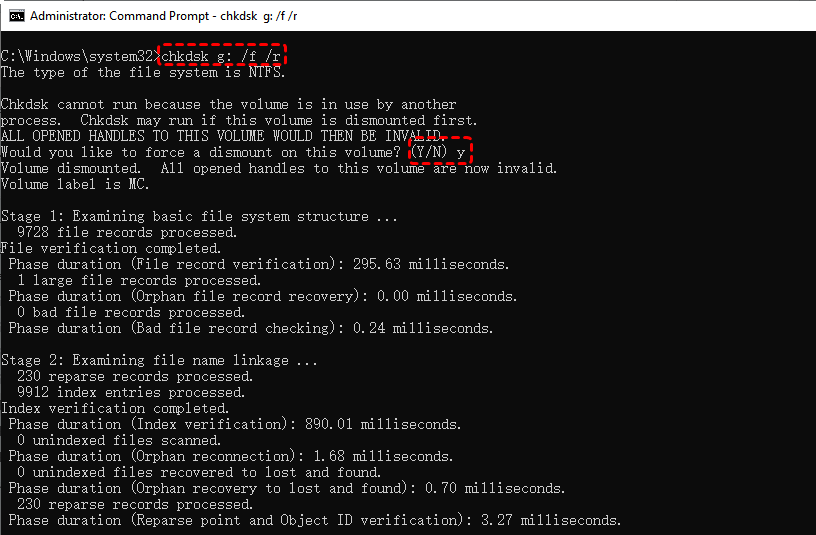
The /f parameter tells CHKDSK to fix any errors it finds, while /r locates bad sectors and recovers readable information.
Way 6. Update Device Drivers
Outdated or incompatible device drivers can lead to the SD full and inaccessible error. Follow these steps to update your device drivers:
- Press the Windows key + R, type 'devmgmt.msc', and press Enter to open the Device Manager.
- Expand the 'Disk drives' section.
- Right-click on your SD card and select 'Update driver'.
- Choose the option to automatically search for updated drivers online.
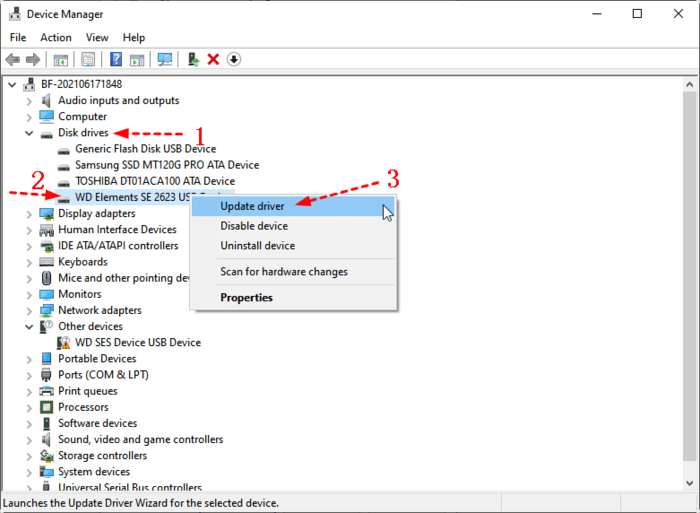
Updating device drivers can resolve compatibility issues and fix the error.
Way 7. Scan for Malware
Malware can affect the functionality of the SD card. Follow these steps to scan for malware:
- Connect your SD card to a computer with reliable antivirus software installed.
- Run a full system scan and ensure the SD card is included in the scan.
- If any malware is detected, follow the antivirus software instructions to remove it.
Scanning for malware helps eliminate any potential threats causing the error.
Way 8. Format SD Card
If CHKDSK fails, use Disk Management to reformat the card:
1. Right-click the Start menu, and choose Disk Management.
2. Find the SD card that shows full and inaccessible, and choose Format.
3. Choose FAT32 for cards 32GB and smaller, exFAT for 64GB and larger.
Way 9. Check for Physical Damage
Physical damage to the SD card can also lead to the error. Follow these steps to check for damage:
Inspect the SD card for any visible damage, such as cracks or bent pins.
Clean the SD card gently using a soft cloth.
Insert the SD card into another device to check if it works.
If there is physical damage, consider replacing the SD card.
How to Fix a Corrupted SD Card on Android Without a Computer
Way 1. Unmount and Remount SD Card
You can use Android's built-in storage settings to unmount and remount. Here is how:
1. First, head to Settings > Storage (or Storage & USB on some phones).
2. You should see your SD card listed there. Tap on it, and choose Unmount.
Unmounting safely disconnects the card from the system, and sometimes just remounting it can clear up temporary glitches.
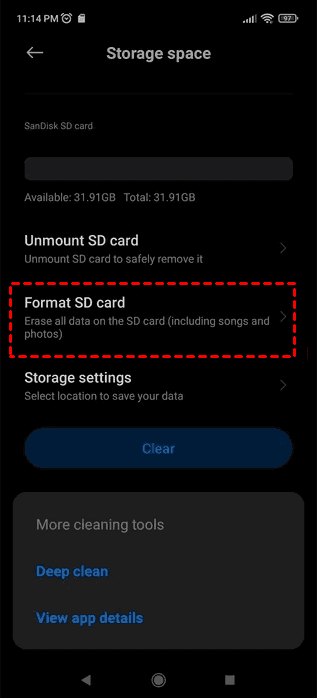
Way 2. Format SD Card in Android
If you have backed up data from the Android and the SD card, you can format the SD card to fix.
1. First, head to Settings > Storage or Storage & USB.
2. You should see your SD card listed there. Tap on it, and choose "Format" or something like that.
Prevent Future Corruption and Storage Errors
Safely removing SD cards every time: Get in the habit of unmounting your card through your device's settings before yanking it out. On Android, that's Settings > Storage > Unmount. On computers, use the system tray icon. It takes two seconds and saves hours of headache.
Format the card on the device you'll use it most—cameras and phones set up file structures that work best with their own devices.
Don't fill the card to 100% capacity; leave some breathing room.
Replace cards every couple of years if you use them heavily—they're not designed to last forever.
Run occasional error checks through your computer's disk utility.
FAQs About Fixing SD Card Errors
What does "SD card is not accessible, the file or directory is corrupted and unreadable" mean?
This error means Windows detects the drive but cannot read its file system. The data may still exist, but the structure organizing it is damaged. This typically happens after improper ejection, virus infections, or physical wear.
How can I fix the SD full and inaccessible error without losing data?
Recover your data first using software like MyRecover, then fix the card. Once data is safe, run CHKDSK on Windows or First Aid on Mac to repair file system errors. Only format as a last resort.
Why does my phone say the SD card is full or not accessible when there's plenty of space?
This indicates file system corruption. Your device misreads the corrupted file allocation table. Clear your phone's cache partition first. If that fails, recover data, then reformat the card.
How do I fix a corrupted SD card on Android without a computer?
Try unmounting and remounting the card in Settings. Reboot your phone with the card inserted. Back up what you can, then format through Settings > Storage > SD card > Format. Deeply corrupted cards may need computer tools.
Can a virus cause my SD card to show full when it's not?
Yes. Malware can hide files, create phantom directories, or corrupt the file system. Run a full antivirus scan on your computer with the SD card connected.
What's the difference between quick format and full format for SD cards?
Quick format removes only the file system index—files become invisible but remain recoverable. Full format overwrites every sector, permanently destroying data. Quick format is safer if you might need recovery later.
How do I know if my SD card is physically damaged beyond repair?
Signs include: not detected on any device, clicking or rattling sounds, visible cracks or bent pins, or unusual heat when inserted. Stop using it immediately if physical damage is suspected.
Final Thoughts
Dealing with an SD card that's throwing up "SD card is full or inaccessible" errors is frustrating, but armed with the right knowledge and tools, you can usually fix the "SD card is full or inaccessible" error and get back to using your card in no time. Remember the golden rules: recover first, repair second, and format only as a last resort.

Stay Updated With Our
Latest Tips
Add us as a preferred source on Google to never miss helpful guides.
 Add as preferred source >>